Corporate Tax registration for only AED 89

Corporate Tax Registration in UAE: Full Guide 2025

In the UAE, businesses must register within 3 months for corporate tax to avoid the AED 10,000 penalty from the Federal Tax Authority (FTA). These rules are applicable to any organization, whether treated as persons or individuals.

So, all businesses, from small companies to established corporations, must register for corporate tax. Of course, with certain exemptions and caveats.

In this article, we will go over who needs to register for corporate tax, the FTA deadlines, the required documents, and how the whole process works inside the EmarataTax portal.

What is UAE Corporate Tax, and Why Registration is Mandatory

In 2022, the UAE issued the Corporate Tax Law, or the Federal Decree-Law No. 47. As per the Corporate Tax Law, taxable persons must register for corporate tax and obtain a Tax Registration Number from the FTA within the prescribed timelines, even if they have already registered for Value Added Tax (VAT).

Corporate tax has mandatory registration because the FTA wants businesses (at least the majority of them) to keep books transparent and in line with international standards.

Corporate Tax Rate in UAE

CategoryCorporate tax rate
Taxable persons0% for taxable income up to AED 375,000 and 9% thereafter
Qualifying free zone persons (QFZP)0% on qualified income and 9% on non-qualifying income
Eligible small businesses with revenue up to AED 3 million per year (so-called small business relief category)0% until the end of 2026 and 9% thereafter (as of the date of publishing this article, small business relief will be intact only till the end of 2026)
Multinational enterprises (MNEs) with global revenue of at least €750 million in at least 2 of the preceding 4 financial years15% (Domestic Minimum Top-up Tax (DMTT))

Who Needs to Register for Corporate Tax in UAE

UAE’s Federal Tax Authority (FTA) requires every taxable person to register for corporate tax, even if you qualify for 0% corporate tax or have already registered for value-added tax (VAT).

Businesses and natural persons that must register for UAE’s corporate tax

Under the UAE’s corporate tax regime, the registration requirement applies to every taxable person. So, virtually all businesses operating in the UAE must register, including:

  • Mainland companies
  • Free zone businesses
  • Foreign companies

The registration requirement applies to sole proprietors as well. Natural persons engaged in business activities with an annual turnover exceeding AED 1 million within a calendar year must register for corporate tax within 3 months of the following year in which the threshold was exceeded.

Note

A group of related companies might opt to register as the Corporate Tax Group, however firstly each company needs to register for corporate tax separately and then form a Tax Group to get a single / unified TRN. This requires that a parent company owns at least 95% of a subsidiary (or subsidiaries), all entities are resident juridical persons, none of the entities are exempt persons or qualifying free zone persons (QFZPs), and all entities follow the same accounting standards and have the same accounting period.

Businesses exempt from corporate tax in UAE

Under the UAE’s corporate tax regime, the following types of businesses are exempt from corporate tax registration:

  • Automatically exempt government entities and government-controlled entities specified in Cabinet Decisions
  • Extractive and non-extractive natural resource businesses are exempt if they notify the Ministry of Finance and meet certain conditions
  • Qualifying public benefit entities listed in Cabinet Decisions
  • Conditionally exempt entities (i.e., which require preliminary approval) like public or private pension and social security funds, qualifying investment funds, and UAE subsidiaries of government entities

CT Registration Deadlines and Administrative Penalties

Missing these registration deadlines will cost you AED 10,000 in administrative penalties:

Corporate tax registration deadlines for residents

EntityRegistration deadline
Juridical person incorporated in the UAEwithin 3 months from the date of incorporation in the UAE
Juridical persons incorporated outside the UAEwithin 3 months from the end of the financial year in which the juridical person was registered under foreign jurisdiction laws effectively controlled by the UAE
Natural personsbefore 31st March in the Gregorian calendar year after the calendar year in which the person exceeded the corporate tax threshold

Corporate tax registration deadlines for non-residents

EntityRegistration deadline
Permanent establishment (branches, subsidiaries, etc.)within 6 months since the existence date
Nexus in the UAEwithin 3 months since establishment
Natural personwithin 3 months from the end of financial year in which they become taxable in the UAE

Tip

Set reminders in calendar to keep up with deadlines.

Required Documents for Corporate Tax Registration

To complete the UAE corporate tax registration process, taxable persons must prepare specific paperwork. The documents required for corporate tax registration in the UAE are:

  • Business formation documents such as Memorandum of Association (MoA), Articles of Association (AoA), or Certificate of Incorporation (COI)
  • Valid Trade License, including branch licenses (if applicable)
  • Emirates IDs, passports, and contact details of all shareholders and authorized signatories
  • Proof of authorization for the signatory, if the person opening the account hasn’t already been authorized in the business formation documents
  • Prior TRNs of shareholders, if any (optional)

Tip

Collect all tax registration documents in advance and ensure that each PDF is less than 15 MB to avoid unnecessary delays.

Step-by-Step CT Registration Application Process via EmaraTax

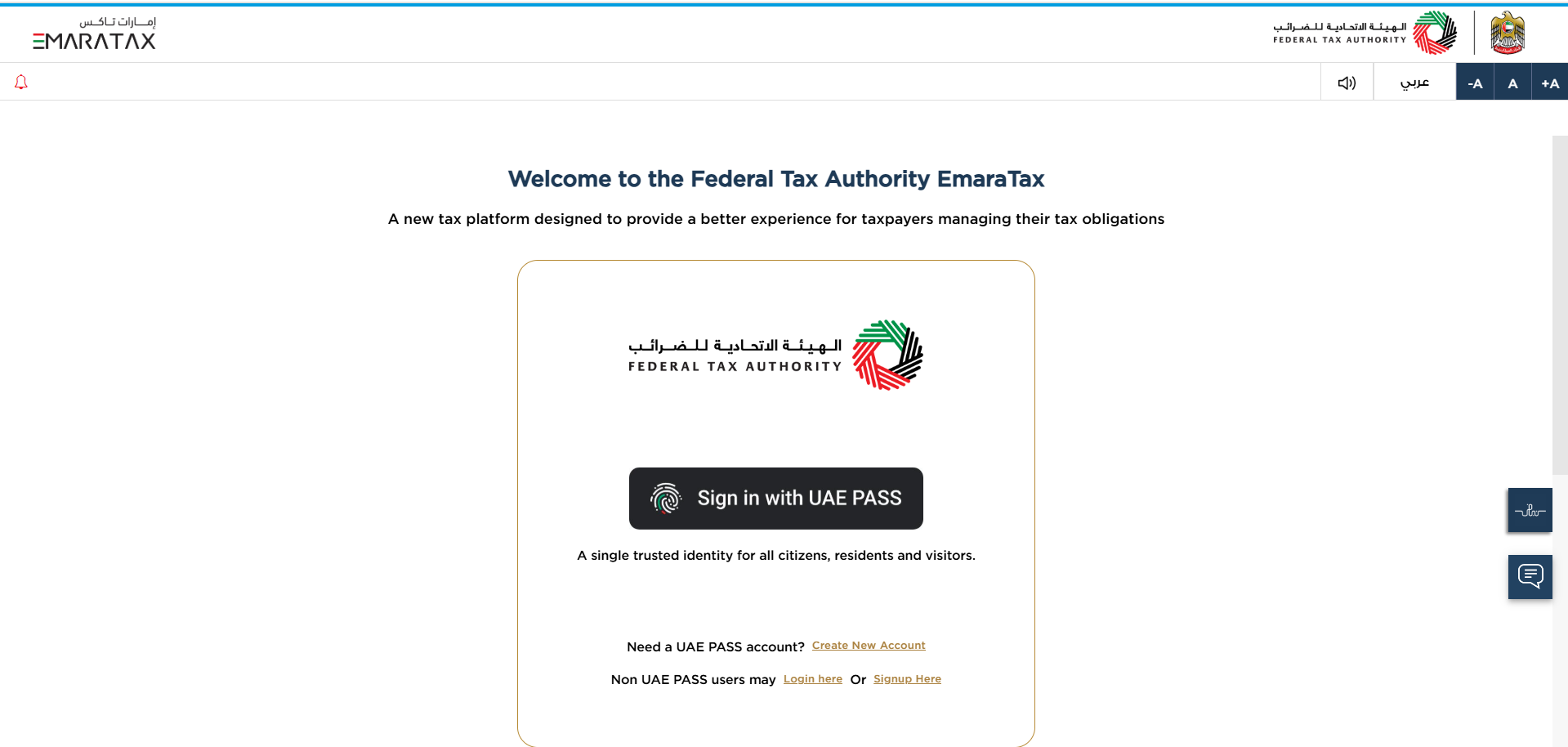
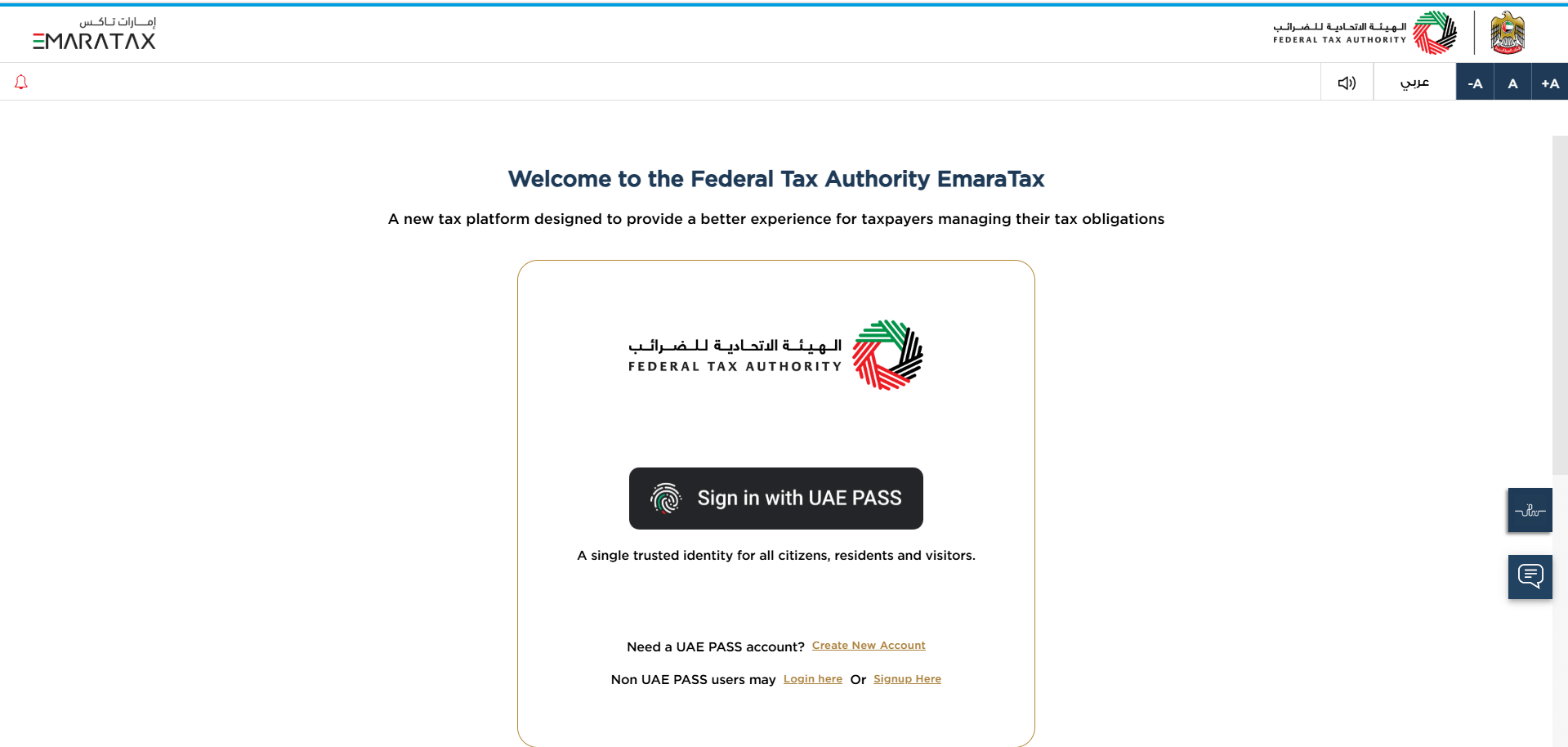
All taxable persons must create an account on EmaraTax and register for corporate tax. Here’s a detailed breakdown of this process:

  • Create an EmaraTax account
    Email ID and phone number are needed to create new EmaraTax accounts on this website.
    EmaraTax accepts international numbers. However, applicants using international numbers for registration can receive the OTP only via email and not on their phone number. The signup and login process is simplified with UAE PASS, a national digital identity framework for all of the UAE’s citizens, residents, and visitors. Registration is possible even without a UAE PASS.
  • Log in and select ‘Corporate Tax Registration’
    After account activation, log in to the Emaratax portal, create a taxable person profile and inside that profile access corporate tax under account overview.
  • Complete the CT registration application form
    Submit all required documents and company details, such as the legal entity type, trade license number, and a brief description of the company activities and owner details. You must also choose an authorized signatory to act on behalf of the company for tax matters when registering for corporate tax. Submit their Emirates ID or passport details and contact information.
  • Apply and receive acknowledgment
    After verifying all information, submit the form. The application acknowledgement will contain a reference number that enables application status tracking.
  • Track application status
    If the Federal Tax Authority (FTA) requires clarifications or additional documents, applicants will be notified directly through the EmaraTax portal and also on the registered mobile number and email ID. This portal also contains real-time updates for applications.
  • Receive your Tax Registration Number (TRN)
    After submission, the FTA takes 20 business days to review applications and issues Corporate Tax Registration Numbers (TRNs) upon approval. Even the smallest mistakes can cause delays, so double-check every detail and document before hitting submit. Many businesses choose to hire tax advisors for smoother UAE corporate tax submissions.
    The CT TRN confirms your registration. It must be used for all future filings and communications with the FTA.
    Please note that having a VAT TRN does not mean you are automatically registered for CT.
Common Mistakes to Avoid During CT Registration

Many businesses face penalties and other difficulties when dealing with the UAE corporation tax. The FTA has clear rules, but overlooking details can delay approval or trigger fines. Below are the most frequent registration mistakes, their consequences, and tips on how to avoid them:

MistakeImpactHow to Avoid
Using the wrong legal entity typeApplication rejection or significant delayAlways check the entity type on your trade license
Missing the registration deadlineImmediate AED 10,000 penaltyMonitor your UAE corporate tax deadlines closely based on your license issue date, and submit well before the corporate tax registration deadline
Uploading incomplete or unclear documentsApplication may be put on hold or rejected, requiring resubmissionPrepare all required documents in advance and ensure scans are clear, complete, and valid
Failing to authorize the correct signatoryApplication rejection and need for re-authorizationConfirm that the authorized signatory listed in your trade license or company records matches the one submitting the form
Mismatched financial yearAED 10,000 in penalties if the financial year information is considered outdated, and further penalties for the resulting late CT filingsCheck the financial year in your submitted business formation documents (eg, MoA, AoA) to set CT filing timelines and update your CT information by submitting a ‘change of tax period’ application via EmaraTax

You can change the financial year using a shareholder/board resolution approving the new financial year and updating the corporate documents, like your Memorandum of Association. Then, you can submit a ‘change of tax period’ application via EmaraTax, which should include the resolution, updated corporate documents, and the reason for changing the tax period.

The FTA approves or rejects such applications by evaluating whether the reason is genuine and not an attempt to manipulate tax deadlines. It also checks that the new tax period is not unusually short or long.

Corporate Tax Compliance After Registration

Companies must meet these ongoing corporate tax-related requirements to remain compliant:

  • File annual returns via EmaraTax within 9 months from the end of the financial year
  • Maintain accounting records for at least 7 years
  • Notify FTA of key changes related to things like ownership, license, activities, or authorized signatories, and update on the portal within 20 business days
  • Make timely tax payments

Tip

Limit your engagement with subsidiaries and other related parties to minimize transfer pricing reporting obligations.

How skrooge.ai can Help with Your Registration

UAE’s corporate tax law can be intimidating to navigate for new businesses and established corporations alike. At skrooge.ai, we combine AI with experienced accountants to simplify the registration process and ongoing compliance.

Our services include:

  • Support for corporate tax and VAT registration and filing
  • Expert tax advisory for ongoing compliance challenges
  • Monthly financial reports (P&L, balance sheets, and cash flow statement)

Contact skrooge.ai today to ensure your business stays compliant with the UAE’s corporate tax law and avoids penalties.

Conclusion

Registering for corporate tax in the UAE is a legal requirement that keeps your business compliant and protected. The first hurdle you need to clear is the corporate tax registration deadline. Missing this deadline can trigger an AED 10,000 fine.

If you’d rather not deal with deadlines and forms, corporate tax consultants in Dubai, such as skrooge.ai, can handle the entire corporate tax registration UAE process so you can stay focused on growing your business.

Can the late CT registration penalty be waived?

Missing your CT registration deadline triggers the AED 10,000 penalty. However, the FTA has provisions for late CT registration penalty waivers.

1. Automatic waivers for certain first filers

If the first CT return or exempt-person annual declaration is submitted within 7 months of the end of the relevant tax period, the penalty is waived or refunded, depending on whether it was already paid. In such cases, there’s no need to file reconsideration requests. EmaraTax credits or removes the penalty in the background.

2. Waiver by application

Businesses can apply for late CT registration penalty waivers, but approval is entirely discretionary. Strong documented reasons, such as serious illness, force majeure, system issues backed by evidence, are necessary for waiver approval. Even then, there is no guarantee that the FTA will waive the penalty.

FAQ on CT Registration in UAE

What is the deadline for corporate tax registration in UAE?

Deadlines depend on your license issue date. Generally, businesses must register within 3 months from issuance. Missing deadlines may result in an AED 10,000 penalty.

Is registration for corporate tax mandatory for all businesses in UAE?

In general, all the businesses, whether they are mainland companies, free zone entities, or foreign companies with PEs, must register, even if they qualify for 0% rate or relief. But there are some exceptions, like government entities and investment funds.

Is CT registration mandatory for loss-making or zero-revenue companies?

Yes, even loss-making or zero-revenue companies must register for CT as long as they are taxable persons. CT payable can be zero, but the registration and filing obligations remain.

What documents are required for corporate tax registration?

Key documents required for corporate tax registration in the UAE include trade licenses, Emirates IDs, passport copies, business activity details, Memorandum of Association, and authorized signatory documents.

How long does the corporate tax registration process take?

Registration timeline typically takes up to 20 business days via the EmaraTax portal. We have seen companies that missed the CT registration deadline because of the FTA approval wait time. So, if the deadline is close or has already passed, it’s better not to delay the application.

What is the penalty for late tax registration?

The FTA imposes an AED 10,000 fine for late registration. This may also affect your ability to file returns on time.

Can I register for corporate tax myself, or do I need professional help?

You can register independently via EmaraTax, but professional support helps avoid errors and delays.

Do free zone companies need to register for corporate tax?

Yes, all free zone entities must register, though some may benefit from 0% tax.

What is EmaraTax, and how do I access it?

EmaraTax is FTA’s official online portal. You can access it through the FTA website.

What happens after I submit my tax registration?

The FTA reviews applications, issues TRNs if approved, and enables filing.

How much does corporate tax registration UAE cost?

Registration itself is free. Skrooge offers registration assistance at AED 399.

From where can we take the date of incorporation for the 3-month rule?

The date of incorporation in your CT registration application should be consistent with the one in your Certificate of Incorporation (CoI). If you do not have a CoI, you should refer to the Memorandum of Association (MoA) or Articles of Association (AoA).


How to Get a Commercial License in Dubai: Cost & Process Guide

Starting a business can be daunting and scary for first timers. As you figure out your market and where you fit in a dynamic landscape like UAE, it helps to think about your business operations and setup process early on. This allows you to focus on your growing operations and establish a lasting advantage within your industry focus.

Dubai’s strategic location as a regional trade gateway provides international businesses with direct access to major markets across the European, African, and Asian geographies. Being at the center of a wealthy region, Dubai’s advanced economic development combines its diversified market and strong government-driven growth, making it an attractive destination for professionals and enterprises.

Setting up a business in the Middle East is one of the most strategic moves for entrepreneurs aiming to tap into global trade opportunities and economic activities. For example, applying for a commercial license in Dubai authorizes businesses to legally engage in trading, importing and exporting physical goods, as well as conduct retail operations across the UAE.

Whether you plan to start a general trading company, an e-commerce store, or a retail outlet, getting the right business license is the first step. This guide explains what a commercial license is, how to apply for one, the fees you need to pay, and the support available plus other benefits of operating under this license.

What Is a Commercial License in Dubai?

A commercial license in Dubai is an official permit issued by the Dubai Department of Economy and Tourism (DET) (also formerly known as the Department of Economic Development or DED) or by relevant authorities within Free Zones. This license is must-have for any business involved in trading or commercial activities including buying, selling, importing, and exporting goods within Dubai or across the broader UAE market. The DET serves as the central authority that reviews applications and coordinates with other government bodies for additional approvals of specific activities.

This type of license, compared to the rest, covers a broad range of operations and services, giving companies the flexibility to operate in Dubai. Businesses holding the license can operate locally and internationally, hire staff, and open corporate bank accounts, making it one of the most versatile and attractive option available.

The wide range of permitted business activities makes this one of Dubai’s most obtained licenses, especially for those whose activities require them to operate in both regional and international markets

Is Commercial and Trade License the same?

While often used interchangeably, commercial and trade licenses have distinct differences. Broadly, a trade license refers to the official permit issued by a governing authority in order for individuals or corporations to conduct business within a specific jurisdiction. A trade license is a mandatory requirement that applies to all types of businesses, regardless of their industry or scale of operations.

Meanwhile, a commercial license is a subcategory of the trade license specifically designed for businesses engaged in buying, selling, importing, exporting, or other trading activities. In other words, while all commercial licenses are trade licenses, not all trade licenses are commercial.

In Dubai, companies must apply for a license that matches their core business activities. The three main license types—Commercial License, Professional License, and Industrial License—serve distinct purposes depending on whether a business focuses on trading, services, or manufacturing.

Other options include the tourism License, which is a permit required for businesses in the hospitality and travel sector, such as travel agencies, event-related enterprises, tour operators, and vacation rental companies, to operate legally; and the e-commerce license (or eTrader License) that permits individuals to conduct business and sell goods and services online, typically through social media or their own website. The eTrader license does not allow for importing or exporting of goods.

Here are the key differences between the 3 main types of licenses issued depending on the nature of the business:

CriteriaProfessional LicenseCommercial LicenseIndustrial License
Primary PurposeEnables individuals or firms to provide services for specialized, skill-based, or advisory requirements such as consultancy, education, or healthcare.Authorizes general trading activities, including buying, selling, import, and export of goods.Permits manufacturing, production, and processing of raw materials into finished or semi-finished goods.
Typical Business ActivitiesConsultancy, design, IT, education, legal, or medical services.Retail and wholesale trading, import/export, general trading, or e-commerce.Manufacturing, assembly, packaging, and industrial production.
Ownership StructureFull foreign ownership is permitted across most professional activities.Most activities now allow 100% foreign ownership under recent UAE reforms.Foreign ownership vary depending on different factors; often allowed in many free zones but some mainland company activities may still require a local partner
Physical Space RequirementOn mainland, an Ejari office or desk is typically required; Free zones may allow flexi-desk or shared facilities suited to the professional activity.On mainland, an Ejari office or desk is typically required; Free zones may allow flexi-desk or shared facilities suited to the professional activity.Must maintain a physical production or manufacturing facility approved by relevant authorities. An Ejari office is required for commercial lease of property.
Regulatory BodyDET for mainland firms, or Free Zone Authority depending on setup.DET for mainland firms, or Free Zone Authority depending on setup.DET for mainland firms, or Free Zone Authority depending on setup.

How to Get a Commercial License in Dubai (Step-by-Step for easy access)

To avoid any legal pitfalls and mistakes, starting a business requires owners to undergo a formal licensing process. However, it helps to know that owners must meet the following minimum criteria to obtain a business license in Dubai:

  • Be at least 18 years of age. Minors above age of 15 may engage in trade subject to court approvals depending on the nature of the transaction and under guardianship or custody
  • Have a valid passport, UAE visa or an entry permit (for non-residents).
  • Have a clean criminal record
  • Have a minimum share capital requirement, if required by the business

Here are the steps to get your commercial license in Dubai:

  1. Identify your business activity
    Choose and identify your business activity/activities. Make sure to include all the related business activities that would apply to maximize your business license, subject to a maximum of ten activities per license.
    The official list of activities can be obtained directly from the Department of Economy and Tourism. Business owners can review permitted activities and codes via DET and relevant free-zone authorities.
  2. Pick your legal structure
    Determine the business legal structure that best applies to your operations, taxation and desired liability for the business. Take into consideration that different business activities would require different structures, depending on the number and nationalities of the business owners.
    • Limited Liability Company (LLC)
      Permits up to 100% foreign ownership in many various sectors, with limited partner liability restricted to their share of the company’s capital.
    • Sole Proprietorship
      Owned by an individual with full control but unlimited liability, typically applicable for professional or service activities and smaller business by freelancers
    • Branch Office
      Usually an extension of the parent company, carrying out the same business activities under the same name. The parent company generally remains fully liable for its branch’s operations.
  3. Confirm the requirements and select the jurisdiction
    Verify all licensing requirements directly with the Dubai Department of Economy and Tourism (DET). You can do this by visiting any of its branches, its business registration windows, or specialized agencies handling areas like exports and investments. The full list of activities eligible for licensing is also available on the official DET website.
    • Mainland Dubai
      Issued by the DET, a commercial license for a mainland company permits businesses to conduct activities within the UAE mainland and internationally. This type of license is ideal for enterprises engaging with local markets or maintaining retail locations.Over 1,000 commercial and industrial activities in mainland can be eligible for 100% foreign ownership, though some exclusions apply to activities with strategic importance.
    • Free Zones
      Commercial licenses that allow 100% foreign ownership, issued by free zone authorities allow trading within only the free zone and internationally. They can trade directly in the UAE mainland either via getting the local agent / distributor or if they get a special permit from authorities (dual license).
    • Offshore Companies
      While offshore entities can incorporate in UAE, they typically cannot trade directly within the UAE and its domestic markets. Offshore licenses are mainly used for international trade, asset management, or holding companies. Example businesses would include Asset protection, consultancy, and investment management.Specific free zones such as Jebel Ali Free Zone (JAFZA) and Ras Al Khaimah International Corporate Centre (RAKICC) provide and allow global entities to retain 100% foreign ownership and exemption from local taxes on income and profits, similar to benefits extended to those with commercial license. Additionally, offshore companies offer complete foreign ownership and have Avoidance of Double Taxation Treaty agreements (DTTAs) with 115 countries, including the United Kingdom.
  4. Reserve your trade Name
    Select a trade name that represents your brand and aligns with your business identity. Ensure it follows naming regulations, including avoiding restricted or prohibited words. DET also does not allow any duplication of existing company names.
  5. Request for an Initial Approval
    Submit an application for an Initial Approval and register your trade name. The total cost of issuing the initial approval is AED 120. You can apply online via the portal on Invest in Dubai, or visit any of the available service centers. The service is typically completed within 10 minutes.
  6. Prepare the Constitutional Documents
    Prepare and notarize the MoA (Memorandum of Association) or AoA (Articles of Association) – documents which define your company’s structure, purpose, governing regulations and operational framework. For Dubai mainland LLC, you would typically prepare and execute MoA, while for free zone companies the standard document will be AoA.
  7. Choose the Business Location that works best for your activities
    After you get the Initial Approval, you can officially lease premises (either a physical office or shared workspace).
    Contact first and check with the Planning Department of the Dubai Municipality regarding the space and verify that the your selected office area is suitable for your business before signing a lease. Sometimes, smart desk or virtual options are also available in free zone areas.
    The tenancy contract must be registered via Ejari for those in Mainland Dubai.
  8. Complete the process for getting your Commercial License
    Submit your full set of application documents to the relevant authorities. To streamline the process, make sure all required documents are complete and settle the applicable license fees before submission. License issuance can take minimum of a week to complete.
  9. Congratulations! You now have your license and can start operations.
    Once your application is approved, you’ll receive your Commercial License, marking the official start of your business journey in Dubai! The obtained license must clearly state your approved business activities. Make sure to keep this in a safe place, and ensure you are up to date for renewals.

What are the Costs and Business Requirements?

If you’re setting up your business in Mainland Dubai, expect to pay fees between AED 15,000 and AED 25,000 for a commercial license. This price range usually includes costs for trade name registration, initial approvals, and other government and administrative processing fees.

For entrepreneurs choosing a free zone setup, the cost can be lower, starting at an average of about AED 12,500. Please note that costs may vary based on the area, the package you select, and the business activities and additional approvals needed, if applicable.

To apply for the commercial license, prepare the documents required:

  • Completed commercial license application form
  • Passports of all shareholders/partners + manager (and visa/entry stamp if applicable)
  • Emirates ID copies (if available).
  • Approved trade name reservation certificate
  • Notarized MoA or AoA
  • Tenancy contract or Ejari registration for the company’s business address
  • Any required external approvals for regulated business activities, as mandated by government authorities

Benefits of Commercial Licenses to your Business

While the process can be difficult and costly, there are benefits to undergoing formal process and obtaining the license required in order to ensure your business success:

  • Legal Permission to Trade
    Setting up legal operations would save you the headache of dealing with more difficult processes in the long run.
  • Government Incentive Programs
    A DET-licensed business is eligible for other forms of government support programs, such as funding, mentorship, special trade events and other Foreign Direct Investment (FDI) incentives.
  • Access to Local and International Markets
    With a Dubai commercial license, your business can easily expand and operate within the UAE, while allowing you access to build better relationships across global markets.
  • Streamline your Business Structure
    It’s much harder to open a company bank account, hire for your operations, and overall talk about growth in your business goals and target market without the license. Doing this in Day 1 would ensure things are in order before you even think of scaling.
  • Ensure business and consumer protection
    Contribute to the economic development by creating a healthy environment for trade and business transparency.
  • Tax Exemptions and Advantages
    Enjoy a tax-efficient, competitive business advantage, including 0% corporate tax for small businesses and no personal income tax.
  • Strong Brand Credibility
    With a licensed registration, other businesses, customers and suppliers are more likely to trust and work with you closely.

With all these benefits and considering the depth of support available within its dynamic economy, it is in your best interest to find the right people you need to integrate seamlessly into the UAE business landscape. More than its booming tourism industry, businesses in Dubai are poised to become a strong hub and contender for bridging between massive economies in Europe and Asia.

skrooge.ai: Who are we, and how can we help you?

skrooge.ai is a UAE-based accounting & tax services firm that blends seasoned accountants with smart automation to keep your books clean, VAT/CT compliant, and always ready for decisions. We’re built for founders and finance managers who want fewer handoffs and clearer numbers: routine work is automated; the judgment calls are handled by people who do this daily. As we learn your rhythms, we become your fractional CFO in your pocket—covering compliance end-to-end and surfacing useful, business-first insights (cash flow, margins, pricing, tax elections) before they turn into problems.

Start your journey and seamlessly integrate your business in Dubai. Contact us to learn how we assist businesses throughout your compliance requirements. Together, we can streamline your financial operations and keep your business audit-ready without the hassle.

Frequently Asked Questions (FAQs)

What is the difference between a commercial license and a trade license?

A commercial license is a specific type of trade license issued for the purpose of carrying out general trading activities. This license is essential for companies that buy and sell goods, or provide trade-related services including commercial brokerage and import-export.
 
A trade license in a broad sense is the official permit issued by governing authorities, allowing individuals or corporations to conduct business within specific jurisdiction.

How much does a commercial license cost for businesses in Dubai?

If you’re setting up your business in Mainland Dubai, expect to pay fees between AED 15,000 and AED 25,000 for a commercial license. This price range usually includes costs for trade name registration, initial approvals, and other government and applicable fees.
 
For entrepreneurs choosing to set up in Dubai’s free business zones, the cost can be lower, starting at about AED 5,500. Actual pricing varies depending on the area, the amount of visas you need and other factors based on the package you select.

Can I get a commercial license in Dubai without an office space?

You need to have an office location in your application as mandated by the DET. However, you can choose to lease a virtual office or a smart desk / shared workspace service, depending on your issuing authority and location.

How many business activities can I have under one commercial license?

You can list your core business activities including all potentially related pursuits, subject to a maximum of ten (10) activities per license for Dubai mainland, subject to compatibility. For free zones the cap on number of activities per trade license varies substantially.

What documents are required to get a commercial license in Dubai?

Apart from the accomplished application form, you need to provide proof of identity (copies of passport, visa, Emirates ID); 2) approved trade name reservation certificate; 3) initial approval certificate issued by DET and the notarized MoA / AoA; 4) Tenancy contract or Ejari registration for the company’s business address.
 
The government may also mandate additional required external approvals for regulated activities.

How long does it take to get a commercial license in Dubai?

The licensing process may take minimum of 1 week, depending on the length of the approvals and the readiness for the paperwork required.

Do I need a local sponsor for a commercial license in Dubai mainland?

Most business activities in Dubai mainland no longer require a local sponsor, thanks to the UAE’s updated foreign ownership laws allowing 100% foreign ownership for many general trading and commercial, industrial, and service sectors.
 
However, certain strategic or restricted industries such as oil, banking, telecoms, or defense still require a UAE national partner or service agent. To confirm, investors should check the approved activity list from the Dubai Department before applying for a commercial license.

How do I renew my commercial license in Dubai?

A commercial license must be renewed periodically. Generally, licenses are issued for a period of one year (however, some jurisdictions may offer a multi-year license). To maintain compliance and continue operations smoothly, businesses must renew their license before its expiration date. Timely renewal helps prevent fines, legal complications, and potential disruptions to your operations.
 
The renewal process can be completed online via the DET platform or respective Free Zone authority, making it simpler for business owners in the future.
 
Key renewal steps:
1. Confirm that your tenancy contract is still valid, attested, and active.
2. Gather all necessary papers, such as your existing trade license, tenancy contract, and shareholders’ passport copies.
3. Submit the renewal application through the DET or Free Zone online portal.
4. Pay the applicable renewal fees based on your business type.
5. Obtain your updated trade license—typically processed within a few business days.

Comprehensive guide to opening a business account in UAE

Dear readers, today we are going to talk about UAE banking system.

UAE-registered businesses should definitely consider opening a UAE business bank account since it simplifies payments and compliance. This will make it easier to trade locally and make VAT and corporate tax payments.

Since most UAE businesses you interact with will make payments in AED, using a local bank account reduces transaction costs. If you operate in insurance or other financial sectors regulated by the Central Bank of the UAE, you will need certificates from UAE-based banks to show that you meet capital requirements. But that is the topic for another day.

For international businesses operating in the UAE, using a local IBAN makes compliance and payments much simpler than what would be the case with a foreign account.

This article will guide you in unlocking these UAE business account benefits by exploring the accounting opening procedure, types of business accounts on offer, and the various types of banks in the UAE.

Why You Need a Business Bank Account in UAE

Without a business bank account in Dubai or any other emirate, international transfer fees alone can drain your resources. New businesses often face immediate payment demands from vendors until they establish trust for periodic settlements.

For example, a US-based business operating in the UAE with 10-20 weekly transactions may end up paying $200-$500 per week just on international transfer fees.

Hidden Costs of Operating Without a UAE Business Account

International transfers often take several days and involve fixed fees. So, to make things work with a foreign account, you must plan your purchases well in advance and in a manner that reduces the frequency of transactions.

This creates an additional administrative burden for your finance team.

Also, businesses without local accounts must constantly monitor foreign exchange rates. While experienced traders may see this as an opportunity, most businesses prefer focusing on core operations rather than currency fluctuations.

Benefits of Company Bank Account Opening in UAE

  • Access to local financing options
    Trade finance, working capital loans, and competitive savings and deposit accounts
  • Faster transactions
    Same-day local transfers instead of 3-5 day international settlements
  • Access to insurance services
    Essential for risk mitigation
  • Spot trading and foreign exchange services
    Competitive rates for currency conversion
  • Payment automation
    Online collection systems, liquidity solutions, and escrow services
  • Business cards
    Corporate credit cards with local currency billing
  • Enhanced business credibility
    Leverage the UAE’s reputation as a stable, high-growth economy to strengthen relationships with partners, suppliers, and clients globally

Types of Business Entities and Business Banking Services in UAE

Different company structures require different bank accounts. Your entity type determines documentation requirements, account features, and approval timelines.

1. Mainland Companies

Mainland companies hold licenses from the respective Emirate’s Department of Economic Development (DED). These entities can operate anywhere in the UAE and conduct business with government entities. Banks view mainland companies favorably during the application process.

A mainland company must pay salaries to employees via the Wage Protection System (WPS), which, in practice, necessitates a UAE corporate AED account (IBAN) or a CBUAE-approved exchange/payroll agent funded locally. Foreign accounts are not WPS-compliant.

Appropriate account types

  • Full-service corporate accounts with cheque books that enable you to put up a delayed guarantee to pay for purposes like renting out office spaces
  • Multi-currency accounts for international trade
  • Working capital facilities and trade finance
  • WPS-compliant payroll services for employee salary transfers

2. Free Zone Companies

Free zone entities operate within designated economic zones and international markets. They enjoy certain tax benefits and, in general, operate under relaxed regulations. However, some banks apply additional scrutiny during account opening due to limited physical presence.

Appropriate account types

  • Standard business accounts with online banking
  • Foreign currency accounts matching business operations
  • Limited cash-related services
  • Corporate cards for authorized signatories

3. Small and Medium Enterprises (SMEs)

SMEs represent the majority of UAE businesses. Banks and fintech providers offer specialized SME packages with lower minimum balance requirements and simplified documentation.

Appropriate account types

  • Zero-balance or low-minimum balance accounts
  • Digital-first banking with mobile apps
  • Payment gateway integrations
  • Simplified lending products

Mandatory Documents Required And Other Conditions for Opening a Business Bank Account

Document preparation determines your success rate and timeline for company bank account opening in the UAE. Here we have compiled a thorough list of required documents, but please bear in mind that the actual required documents may vary greatly depending on the bank and your company’s risk profile.

Company-related documentation required for opening a business account

  • Valid Trade License/Commercial License
  • Tenancy contract as proof of address
  • Attested Memorandum of Association or Articles of Association
  • A six-month bank statement of the company, if available
  • Sample of invoices or client agreements
  • Most recent financial statement from another bank, if available
  • Business plan with revenue forecast

Individual-related documentation required for opening a business account

  • Emirates ID (if available) and passport copies for all shareholders
  • Utility bills or other documents for proof of address
  • Power of Attorney or Board of Resolution authorizing you to open the account on the company’s behalf
  • Bios/CVs for key persons

Additional documents may be required for certain high-risk sectors.

KYC Requirements and Compliance for Business Banking Services

In addition to submitting the necessary paperwork, you must complete a declaration confirming that you avoid questionable practices and comply fully with anti-money laundering laws.

UAE banks have meticulous Know-Your-Client (KYC) procedures since it is critical to estimate the client’s risk profile based on various factors, including the nature of activity, geographies of work, and complexity of shareholder structure.

Complex shareholder structures warrant comprehensive explanations. Banks will verify ultimate beneficial owners (UBO) who hold at least 25% ownership. Depending on the number of layers of ownership, banks might extend investigations to UBOs with even 10% ownership.

Step-by-step guide to seamless access for business banking services

  • Which bank account package is right for you?
    UAE-based entities can choose between conventional banking options and digital-first ones, which are also known as neobanks. Account opening speed and the ease of onboarding represent critical differentiators in this regard. Traditional banks require 2-4 weeks for account activation, while neobanks may complete the process within 3 business days.
    Criteria for choosing the right account package:
    • Monthly fees and transaction charges
    • Minimum balance requirements
    • Digital banking features
    • Multi-currency account availability
    • Relationship manager availability
    • Branch network access
    • Compatibility with your accounting software
  • Do you have all the necessary paperwork?
    Compile all paperwork prior to initiating your request. Contact the institution’s business banking team to check the most recent requirements, as documentation needs change with compliance updates and internal risk policies.
  • How can one submit the corporate bank account opening application?
    Most banks accept online applications for business accounts. However, in-person meetings may still be necessary.
    After submission, banks conduct compliance checks, including:
    • Paperwork validation and cross-referencing
    • Ownership structure analysis
    • Risk assessment based on business activities
    • Source of funds verification
    • Sanctions list screening for all shareholders and directors
  • Response times range from 3 business days for simple cases to 4 weeks or longer for complex ownership situations or high-risk sectors.
  • Corporate bank account activation
    Upon approval, you receive account details, including your IBAN.

Traditional Banks vs. Neobanks: Where Should You Open Your Corporate Account in Dubai?

Conventional banks offer comprehensive and reliable services. They excel in trade finance, foreign exchange services, and relationship-based banking. On the other hand, digital-first banks provide efficient and user-friendly digital interfaces. They suit startups and SMEs seeking a fast setup as opposed to traditional banking relations.

FeatureTraditional banksNeobanks
Minimum balanceZero to just enough for covering monthly feesCertain banks like Wio offer accounts with zero minimum balance
Monthly feesAED 0 – 1,500AED 99 – 500 + VAT
Account opening speed2-4 weeks~3 business days
Cheque booksPlans with unlimited free cheque books availableTypically not offered
Branch accessFull branch network with teller transactions (some tiered/limited)Limited to no physical branches
Digital featuresStandard online bankingAdvanced online capabilities, such as multiple free user accounts
Relationship managementDedicated relationship managers on offerSelf-service digital platform
International transfersPreferential foreign exchange rates, ~$20-30 per SWIFT transfer~$20-30 per SWIFT transfer
ExampleFirst Abu Dhabi Bank (FAB), Abu Dhabi Commercial Bank (ADCB), Emirates NBD, Abu Dhabi Islamic Bank (ADIB)Wio Bank, Zand Bank, ruya bank, Mashreq NEO BIZ

Recommendation

Open business bank accounts with conventional banks if you need trade finance, regular cash deposits, or operate in sectors that demand established banking relationships. Choose neobanks for digital-first operations, quick setup, and small transaction volumes. Visit the Central Bank of the UAE for regulatory information.

How to overcome the common challenges in accessing business banking products

Opening a company bank account in the UAE has several obstacles, which mainly include:

Challenge 1: Establishing a local presence and compiling all the necessary paperwork

Banks demand extensive documentation and physical presence verification. Free zone companies are under greater scrutiny to show the real substance of operations.

Solutions for entrepreneurs lacking local presence or documentation

  • Work with consultants who understand bank-specific requirements. Contact skrooge.ai for assistance and guidance.
  • Set up an office presence before applying
  • Prepare all documents with proper attestations before starting applications
  • Maintain clear organizational charts showing ownership structure
  • Consider mainland incorporation if full-fledge banking services are essential to your operations

Challenge 2: Access to short-term loans

Short-term financing for working capital needs or trade financing might not be available to new businesses.

Solutions for accessing value-added services like short-term loans and free teller transactions

  • Make regular transactions to establish healthy relations with your bank
  • Ensure that account balances remain well over the monthly balance thresholds to demonstrate financial discipline and liquidity
  • Share a detailed business plan with revenue projections
  • Have a good accounting provider to maintain a proper level of financial hygiene since the very beginning

Challenge 3: Impact of industry risk

If you operate in high-risk industries, there’s a high chance that your application will be rejected since banks will hold you to higher standards.

Solutions for managing industry risk

  • Apply to multiple banks simultaneously to increase approval chances
  • Prepare detailed compliance frameworks demonstrating risk controls
  • Obtain all regulatory approvals before banking applications
  • Work with consultants experienced in high-risk industry banking

How skrooge.ai Can Help

skrooge.ai is a UAE-based accounting and tax services firm combining experienced accountants with smart automation. We keep your books clean, VAT and CT compliant, and always ready for business decisions.

Our team understands what banks look for during applications. We can also introduce reliable partners who help with compliance vetting and document preparation.

Contact us to learn how we assist businesses throughout account opening and continuous financial management.

FAQs about UAE business accounts

How long does it take to open a business bank account in the UAE?

Opening a business account in the UAE takes 2-4 weeks with conventional banks. The process with Neobanks like Wio might take around 3 working days. The duration hinges on documentation completeness, business structure your sector’s risk profile.

What documents are required to open a company bank account in the UAE?

Essential documents for opening a business account in the UAE include passport copies and Emirates IDs for authorized signatories (and UAE residence visas if applicable), trade license, memorandum of association, articles of association, board resolution authorizing a person to open a bank account, and tenancy contract.

Can I access business banking services in the UAE as a non-resident?

Yes, non-residents can open a business bank account in the UAE if they meet bank-specific requirements. For instance, Emirates NBD typically accepts applications from non-residents if the business operates in the trading, manufacturing, contracting, transportation, or services sectors and at least one account signatory is a UAE resident.

What is the minimum balance requirement for business banking in the UAE?

Minimum balance requirements differ across banks and account types. Emirates NBD’s Connect account requires balances sufficient to cover monthly fees and charges. Wio offers zero minimum balance accounts.

Which banks are best for business banking services?

Open business accounts with UAE Banks Federation (UBF) member banks. These organizations uphold industry excellence standards and deliver comprehensive offerings via inter-institutional collaboration. Make sure that your bank is registered with the Central Bank of the UAE.

Do I need to visit the UAE in person to open a business bank account?

Most UAE banks accept online business bank account applications, but in-person visits are typically required at some stage, especially for conventional banks.

What is the difference between opening an account for a free zone vs a mainland company?

Mainland companies typically experience easier account opening processes with less stringent limitations than free zone entities.

Can I open a multi-currency business account in the UAE?

Yes, most major UAE banks offer multi-currency business accounts.

What are the common reasons for business bank account application rejection in the UAE?

Applications get rejected for a number of reasons, such as incomplete documentation, stated business activities not matching the actual ones, lack of local physical presence, absence of UAE resident authorized signatories, and high-risk business activities.

How can skrooge.ai help with accessing business banking services in the UAE?

You can rely on skrooge.ai‘s broad partnership network, working directly with dozens of the most popular UAE financial institutions to open a business bank account in the UAE.

skrooge.ai CPO shares vision for the Future of Accounting

We launched skrooge.ai at the beginning of 2025 with a very simple purpose – so people could enjoy accounting services in the UAE as they enjoy their banking with new-age apps like WIO or Revolut (soon in the UAE).

And if in neobanking the underlying driving technology was mobile/cloud, in accounting it is AI/ML. And that’s exactly the tool that we’re obsessed with.

What does AI bring to the table?

  1. It enables quick, consistent, and precise judgments while processing transaction-related documents in specific contexts such as country, industry, or client. This is important when helping an accountant process hundreds of transactions for multiple clients in different industries within a regular working day.
    People struggle to remember the custom chart of accounts of several dozen clients, or handle accounting for multiple complex industries like logistics or manufacturing. And don’t forget about the ever-changing regulatory landscape!
  2. Besides making judgments, accounting is also very communicative. An accountant needs to request a lot of information (explaining why he needs it), clearly guide the client throughout the process with multiple deadline cadences (monthly/annually), educate him on the meaning of the numbers provided, and promptly reply to accounting- and tax-related client queries.  AI can significantly speed up this process by confidently handling conversations while considering the client’s communication preferences.
    People are usually so underwater with those repetitive judgments from p.1 that they underestimate the importance of timely, clear, and structured communication. And sometimes they just get moody or simply forget that accounting lingo isn’t taught in schools.
  3. Last, but not least – on-demand, custom, personalized analytics. Not only based on the numbers of your company, but also benchmarked to industrial standards. Forget about being stuck with one-size-fits-all dashboards or very complex Excel spreadsheets that only expensive financial/data analysts could translate into human language. AI lets you speak to your numbers and get instant solutions that can then be used for FP&A-type business decisions.
    People very rarely possess the skill set required for both a great accountant and a financial analyst. And those who do usually cost a lot and aren’t able to generate those analytics as fast as AI.

Given the praise I expressed for AI in the previous three points, you might think that people are no longer important in the business, but actually, quite the opposite!

Why does the quality of people matter even more now?

AI is still an amplifier technology, mostly used in the co-pilot form, so if you don’t hire the best pilots in the game, your AI assistant won’t be as effective. Moreover, it might also learn bad practices from them and become a B-player. Same mechanics as in regular human teams, just in a digital realm. If properly used, AI could also make the screening process much more effective, helping you analyze tons of conversational data across numerous ongoing interviews. It could also help design the personalized sets of questions and problems for the short-listed candidates to assess their particular weak points.

And after those people are hired, you, as a manager, can provide much more constructive, personalized, and data-driven feedback by having AI review their entire work (judgments and communications). This enables professional growth that was previously impossible.

We at skrooge.ai deeply believe that hiring and coaching the best accounting professionals is still the number one factor for success in this business. That’s why our interview-to-offer rate is below 2% and our clients feel the difference from the very first touchpoints with our team.

Why are we hyped about the UAE, and where can we be found?

We’re located at the Dubai Chambers building. We’re excited to serve the UAE SME market, which is growing rapidly and highly values technology-enabled services. People here prioritize their limited time and use these services to leverage it. The hustle-driven, capitalistic culture is strong – just visit one of the numerous business events hosted here regularly – you’ll see it yourself. Or you’ll see us there.

We believe in the power of using numbers. Not just for the tax compliance use case, but for using them as the key asset for decision-making. So, if you’re interested to learn more – go visit skrooge.ai to book a call or come visit us at our office. We’re here throughout the week, building for the future that we envision.

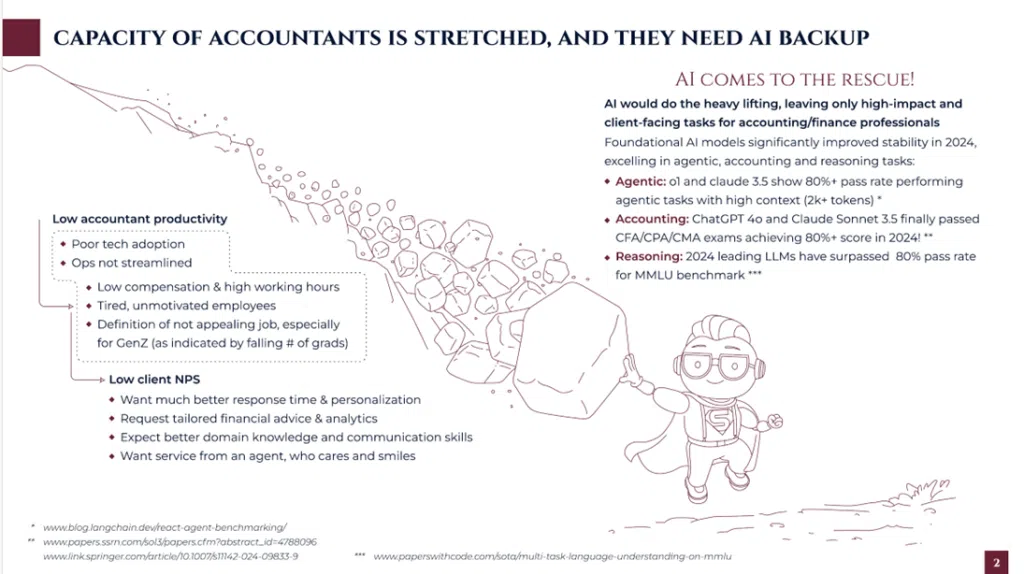
And as a little extra fun (since I think Skrooge in a Superman suit is adorable 😊), here’s the slide from our deck on the same topic:

Understanding Zero-Rated Supplies in UAE: Key Insights and Guidelines

Whether your business is export-focused or mainly operates in the UAE itself, you need to know when a supply qualifies as zero-rated and when it doesn’t. Businesses that understand the difference can turn zero-rated supplies into a tax advantage.

Under the UAE VAT framework, zero-rated supplies attract a 0% value-added tax (VAT) and are eligible for input tax recovery.

These supplies can include various items pertaining to education, healthcare, residential properties, and exports, depending on the circumstances.

This article explores the financial impact of zero-rated supplies, how businesses should leverage such items, and compares them with exempt supplies.

What Are Zero-Rated Supplies in UAE?

Zero-rated supplies refer to goods and services that attract a 0% VAT rate under the UAE VAT law.

They should not be confused with exempt supplies where VAT is inapplicable. Invoices for zero-rated supplies show a 0% VAT charge, whereas invoices for exempted supplies don’t mention VAT charges.

This minute difference in VAT treatment has major repercussions. Since VAT is technically charged on zero-rated supplies, businesses can recover input tax on related costs for such supplies.

On the other hand, businesses dealing with exempt goods and services cannot recover input tax.

Thus, the UAE tax framework allows companies dealing in zero-rated VAT supplies to improve their cash flows and overall profit margins.

VAT treatment by category

Type of supplyVAT RateInput tax recovery
Zero-rated supplies0% VATAllowed
Standard-rated supplies5% VATAllowed
Exempt suppliesNo VATNot allowed

UAE VAT Classification: Zero-Rated and Exempt Supplies

Understanding the difference between zero-rated and exempt supplies is essential for VAT compliance. In both categories, customers do not pay VAT charges, but they have completely different input tax treatment.

As mentioned earlier, input tax recovery is allowed for zero-rated supplies, not exempt ones.

Another key difference between zero-rated and exempt supplies is regarding VAT registration. If businesses deal only in exempt supplies, they are not required to register for VAT. In contrast, businesses dealing only in zero-rated supplies can apply for an exception from VAT registration if they meet VAT exception requirements. However, you cannot recover input tax without VAT registration.

Key differences between zero-rated and exempt supplies

  • Input tax treatment:
    • Recoverable for zero-rated supplies
    • Not recoverable for exempt supplies
  • VAT registration requirements:
    • Zero-rated supplies: Mandatory VAT registration once the threshold is reached, but an exception is available
    • Exempt supplies: VAT registration is not required

List of Goods and Services Exempted from Value Added Tax

  • Certain financial services, such as loans, investment products, and money transfers
  • Resale of existing residential property, and the sale or lease of residential buildings occurring 3 years after completion
  • Sale or lease of bare land, i.e., lands with zero buildings
  • Local public transportation operating in the UAE

Pro Tip

Businesses dealing in zero-rated and exempt supplies must maintain separate VAT documentation to avoid misclassification penalties.

Comprehensive List of Zero-Rated Supplies in UAE: Goods and Services With 0% VAT

The following list outlines goods and services subject to a 0% VAT rate under the UAE VAT Law:

  1. Export of goods
    Export of goods that leave the UAE or move into approved customs suspension regimes within 90 days from the supply date are zero-rated, if the following conditions are also met:
    • Direct exports – Supplier arranges transportation
      • Exporter maintains official and commercial export evidence or customs suspension
      • Example: A UAE factory shipping electronics to Germany.
    • Indirect exports – Recipient handles collection in UAE
      • The recipient maintains official and commercial export evidence or customs suspension and shares copies with the exporter
      • No use or alteration of goods between supply and export or customs suspension, other than what’s needed for preparing the goods for export or customs suspension
      • Goods must not leave the UAE under the custody or control of passengers or crew members of an aircraft or ship
      • Recipient must not reside in the UAE, have a Tax Registration Number (TRN) in the UAE, or have a place of establishment or fixed establishment in the UAE
      • Example: European companies buying auto parts in Dubai for export to Spain.
  2. Export of services
    The benefit of the service should be outside the UAE. For example, selling UAE real estate to an international buyer will not be counted as an export of services. Also, the service recipient cannot be in the UAE or a UAE resident.
  3. International transport
    Transportation of goods and passengers between the UAE and another country, including transport within the UAE as part of bigger international trips, is zero-rated.
    Example: Flights from Dubai to London.
  4. Means of transport
    Airplanes, ships, and other vehicles used to transport passengers and goods, and related supplies used in operation, repair, and maintenance, are zero-rated supplies.
  5. Onboard consumption items
    Items consumed onboard airplanes, ships, and other approved transportation during travel are zero-rated.
  6. Precious metal investments
    Investments into tradeable and 99% purity gold, silver, and platinum are zero-rated.
  7. Certain property sales and leases
    First sale or lease of the following buildings is zero-rated:
    • Properties to be used by charities
    • Residential buildings (within 3 years of completion)
    • Buildings converted from non-residential to residential use if the supply is made within three years of the conversion, and the original building was not used as a residence and did not form part of a residential property in the five years before the conversion began
  8. Crude oil and natural gas
    Example: Petroleum producers selling crude oil to registered refineries.
  9. Certain educational services
    Services provided by educational institutions funded or owned by the government, and the books related to the curriculum, are zero-rated.
  10. Certain healthcare services
    Preventive healthcare services and basic healthcare services provided by approved entities to humans are zero-rated, along with related medicines and medical equipment, if approved by the Ministry of Health.
  11. Rescue-related supplies
    Supplies for aircraft and vessels meant for air and sea rescue operations are zero-rated.

Conditions and Documentation for Input Tax Recovery

VAT registration with the Federal Tax Authority (FTA) and a valid Tax Registration Number (TRN) are necessary for input tax recovery.

Can my business register for VAT?

Registration is mandatory for businesses whose annual taxable turnover exceeds AED 375,000. If your business does not meet this requirement, it can still voluntarily register if its annual taxable turnover exceeds the voluntary registration threshold, i.e., AED 187,500.

VAT Registration Process

VAT registration requires an e-service account with the Federal Tax Authority (FTA) and the following documents:

  • Business formation documents
  • Trade and commercial licenses
  • Identity proof of owners and authorized signatories
  • Power of attorney document for the authorized signatory
  • Declaration of total taxable supplies and monthly sales since establishment
  • Supporting business records
  • Revenue forecast
  • At least 3 VAT invoices
  • Customs information

Processing time for applications is approximately 20 business days. If your application is successful, you will receive a Tax Registration Number (TRN) and a VAT Certificate.

Best Practices for Compliance with VAT Rules

Adhering to the following best practices ensures smooth audits and timely input tax recovery:

  1. Charge VAT as required: Books and invoices should accurately reflect VAT charges, even when the product is zero-rated.
  2. Maintain proper documentation
    • Property-related documentation – At least 15 years
    • VAT-related business records – At least 5 years
      • Financial records and customs declarations for every supply and import
      • Tax invoices (Issued and received)
      • Goods and services not used for business purposes or for which input tax was not claimed
      • Export documents
  3. Timely filing of VAT returns: File Form VAT201 within 28 days from the end of your tax period

Impact of Zero-Rated Supplies on Your Business Expenses

Zero-rated supplies unlock two major competitive advantages. Firstly, input tax recovery improves cash flow efficiency and helps achieve higher profit margins. Secondly, because these supplies carry a 0% VAT, you can provide more competitive prices to customers and enjoy greater demand.

To maximize these gains, ensure your business:

  • Completes its VAT registration with the FTA
  • Retains tax invoices and export documentation
  • Calculates VAT returns accurately to avoid misclassification penalties
  • Files VAT returns on time

Conclusion

Tracking and documenting transactions related to zero-rated supplies can be challenging for small businesses as well as corporations executing a lot of transactions every day. Without the proper tools, this can turn into a compliance nightmare, forcing businesses to give up valuable input tax recoveries in fear of triggering penalties.

Tired of VAT headaches? For just AED 699 per month, skrooge.ai ’s Human + AI business model keeps your VAT filings clean and compliant. Automation does the heavy lifting while certified accountants review every return before submission. Get in touch to learn how we can help you stay agile while meeting every FTA compliance requirement.

FAQs on Zero-Rated Supplies in UAE

What are zero-rated supplies in the UAE?

Goods and services that have a 0% VAT rate are classified as zero-rated supplies in the UAE. Unlike VAT-exempt supplies, businesses can recover the input tax paid on purchases related to the production of zero-rated supplies.

Can I claim input VAT on zero-rated supplies?

If your business sells zero-rated supplies, you can recover the input VAT costs, provided that you have the necessary documentation and have completed your VAT registration.

Do I need to register for VAT if my business only makes zero-rated supplies?

Businesses that only sell zero-rated supplies can apply for a VAT registration exception. However, such businesses forfeit the ability to recover input VAT costs.

Should I report zero-rated sales on my VAT return?

Reporting zero-rated sales on Form VAT201 is crucial for recovering input VAT costs.

Are all exports from the UAE automatically zero-rated?

All exports, including indirect exports, are considered zero-rated.

How does zero-rating benefit my business financially?

Businesses dealing in zero-rated supplies have better profit margins and can offer more competitive prices.

What happens if I incorrectly classify a supply as zero-rated?

Misclassifying a supply as zero-rated can attract a fine of up to 50% of the underpaid VAT. However, businesses may correct such errors through voluntary disclosures, with proportionate penalties applied depending on the circumstances. Repeat offenders may face a higher penalty.

Is the first sale of a residential property always zero-rated?

First sales of residential properties are zero-rated only if the transaction occurs within three years of the building’s completion, or if it is the first supply of a property converted from non-residential to residential use, given that the supply occurs within three years of the conversion and the building meets the qualifying conditions related to prior use.

Bookkeeping services in the UAE: proper financial management for business growth

To control your business, you need to control its numbers. Without systematic bookkeeping, it’s impossible to accurately evaluate profits, make informed decisions, and remain compliant with UAE laws. In this article, we’ll explain what bookkeeping is, why it’s important, figure out the best accounting services on the market, compare in-house and outsourced bookkeeping, and explain how modern technologies simplify accounting, saving your time and money.

What is bookkeeping, and why does a business in the UAE need it?

Bookkeeping is the daily process of recording and organizing a company’s financial transactions. It includes tracking all receipts and payments, classifying them, and storing the supporting documentation. Simply put, bookkeeping shows where money comes from and where it goes, helping you see the full picture of your business.

Why is bookkeeping important?

Bookkeeping serves a dual purpose for a company: it creates financial transparency and ensures compliance with UAE laws. 

Without accurate financial records, you won’t be able to:

  • Analyze the company’s profitability and prepare financial reports for each accounting period, such as cash flow statements and profit and loss statements.
  • Control cash flows and promptly detect liquidity issues. 
  • Make informed financial decisions.

In the UAE, bookkeeping is required for FTA compliance, makes IFRS adherence possible, and is necessary for accurate VAT accounting. Proper bookkeeping means your financial statements will be transparent and compliant with UAE standards.

FTA requirements

The FTA requires accurate and timely bookkeeping from all companies in the UAE, including:

  • The company’s financial records retention
    Companies are required to retain the accounting records of all businesses’ financial transactions for at least 5 years following the end of the tax period to which they relate. Without proper bookkeeping, it is easy to lose track of individual transactions and their supporting documentation.
  • VAT compliance
    Bookkeeping is essential to VAT compliance, as well as taking advantage of input VAT recovery. First of all, up-to-date bookkeeping will indicate whether your company has exceeded the VAT threshold, which would make it mandatory to register for VAT. Moreover, well-organized accounting records are crucial for calculating your net VAT due, filing the correct VAT return, and answering any FTA follow-up questions if needed.
  • CT compliance
    Similarly, bookkeeping is critical for corporate tax compliance. Without a proper bookkeeping process, it is impossible to calculate CIT payable, not to mention IFRS adherence and passing audits.

If bookkeeping is not conducted correctly, a company may face fines, loss of tax deductions, and audit problems. The common bookkeeping-related mistakes and penalties are as follows:

MistakePenalty
Late VAT registrationAED 10,000
Incorrect VAT return filingAED 1,000 for the first time; AED 2,000 in case of repetition.
Incorrect CT return filingAED 500 per month for the first 12 months and then AED 1,000 per month
Failure to provide supporting records upon FTA requestAED 10,000 for the first time AED 20,000 in case of repetition

Source: Administrative Penalties for Violation of Tax Laws in the UAE

Modern accounting software solutions

With bookkeeping being so critical both for company management and compliance, it is clearly a process to take seriously. Thankfully, the days of massive document folders, paper ledgers, and comprehensive Excel spreadsheets are gone – modern software makes accounting much easier. Generally, the benefits of using modern bookkeeping services are as follows:

  • Real-time access
    Modern platforms enable you to view transactions at any time, as long as you are connected to the Internet.
  • Mobile compatibility
    Best-in-class software vendors provide mobile versions of their applications, allowing you to stay on top of your company’s finances even on the go.
  • Security
    With data stored in the cloud, you can sleep easily knowing no one can access your transactions without proper permissions. Moreover, the data is backed up, meaning you can still access the records if your accountant’s laptop is damaged.
  • Precision
    With standardized input and automated reconciliation, modern platforms virtually eliminate human error from bookkeeping.
  • Integrations
    With thousands of integrations available via built-in application stores, cloud accounting software can be turned into an industry-specific solution in a few clicks. Startups can seamlessly integrate accounting with their CRM, while retail and e-commerce companies would appreciate linking direcly to their inventory management systems. Importantly, most providers offer bank integrations, automating data intake and streamlining bank reconciliation.

Popular bookkeeping software in UAE 

Here is a list of popular bookkeeping software solutions:

  • Zoho Books
    Popular bookkeeping platform known for the free tier for small businesses. As part of Zoho ecosystem, it leans heavily on Zoho-branded solutions for add-ons with a smaller third party app marketplace.
  • Quickbooks
    The oldest and largest bookkeeping platform, known to most accountants. It has by far the widest suite of integrations and is immensely flexible for niche use cases. The downside is the complexity, especially for newer firms, and pricing, which can increase rapidly with the number of users and addons.
  • Xero
    An established software provider differentiated by unlimited users and user-friendly UX, but less flexibility and occasionally less advanced features.
  • Wafeq
    As a Dubai-born accounting software vendor, Wafeq is popular for tailor-made solutions for MENA markets and Arabic language support. Wafeq is a relatively new entrant to the space, so expect less accountants to be familiar with the system. Despite being a UAE-based company, it is mostly used in the KSA.

Please note that all these platforms require a professional accountant to operate them. If you do not want to dedicate an in-house accounting team, it is best to outsource the bookkeeping to a professional team augmented by modern technology.

Benefits of outsourcing accounting services in the UAE

Comparison Chart: in-house vs outsourcing accounting

Let’s compare in-house and outsourced approaches to bookkeeping:

FactorIn-House BookkeepingOutsourced Service
CostHiring, salary, visa, office costsFixed monthly fee, no hidden expenses
ExpertiseLimited to one or two employeesFull team of certified public accountants
ScalabilityDifficult to expand with growthEasily scales with transaction volume
ComplianceHigher risk of VAT and IFRS errorsGuaranteed compliance with UAE laws

Outsourcing accounting advantages

  • Cost savings
    There’s no need to pay a full-time accountant and spend money on visa, insurance and office space.
  • Expertise and speed
    A professional accounting team, especially combined with modern technology, can complete bookkeeping quickly and efficiently.
  • Guaranteed tax compliance
    Professionals constantly monitor updates on UAE laws.
  • Focus on growth
    You free up time for your company’s strategy, business operations, and product development.

Thus, for small companies, outsourcing is a practical and safe way to keep the books clean.

Why choose skrooge.ai for your company?

We are a new generation accounting company — run by finance professionals and Skrooge — the clever AI CFO. As experts, we deliver clarity, insight, and strategic guidance while AI automation minimizes human errors. Our mission is simple: we save your time and money while delivering clear, precise, and tax-compliant financial statements.

How can we help you with the bookkeeping process?

Keeping books clean might be overwhelming: tracking daily transactions, following tax season timeliness, and preparing financial statements. That’s where skrooge.ai comes in. With us, the process becomes smooth because:

  • No more mistakes
    At skrooge.ai, we use both pairs of eyes — certified accountants and AI-powered software, which helps to ensure 100% accuracy.
  • No more hidden costs
    We offer a fixed price for our services, ensuring you don’t overpay.
  • No more missed thresholds
    We constantly monitor your rolling 12-month turnover to ensure you register for VAT on time.
  • No more skipped deadlines
    Automated reminders keep you on schedule, so you avoid penalties.
  • No more headaches with strict FTA requirements
    We know UAE legislation inside out and stay up to date with every change, ensuring you are always FTA compliant.

This material is for informational purposes only and does not constitute legal or tax advice.

FAQ

What is bookkeeping, and why is it important for UAE businesses?

Bookkeeping is the day-to-day process of recording and organizing all business transactions: from tracking and classifying receipts and payments to storing the supporting documents. For UAE companies, bookkeeping matters for two reasons: clarity and compliance. Clean books let you analyze profitability, monitor cash flow, and prepare financial statements, so you can make informed decisions. On the compliance side, proper bookkeeping underpins FTA requirements: it helps you stay VAT and CT compliant and respond to FTA queries.

How much do bookkeeping services cost in Dubai?

Bookkeeping cost depends on various factors. An in-house accountant would be costly, as you would need to pay for salary, visa, insurance, an office desk, and also purchase a bookkeeping software subscription. Outsourced bookkeeping would be much cheaper. At skrooge.ai, we provide accounting services from AED 699.

What is the difference between double-entry bookkeeping and single-entry bookkeeping?

In a single-entry system, every transaction is recorded once and it works only for small businesses with simple operations. The double-entry system records each transaction twice, as a debit and a credit. It ensures that what the company owns always matches what the company owes. This method maintains balance and accuracy in ledger accounts, reducing the risk of financial errors.

Do you provide VAT filing and compliance services?

Yes, at skrooge.ai, we provide full-cycle accounting: from monthly bookkeeping to CT & VAT registrations and ongoing compliance.

How quickly can you set up my business’s bookkeeping?

We can set up bookkeeping for you within a few business days after a short kickoff.

What types of businesses do you serve in the UAE?

We work with a wide range of companies, including small freelancers, general traders, manufacturers, SPVs, and startups.

What’s included in the monthly fee—and are there hidden fees?

Your monthly package includes the following services: bookkeeping, VAT and Corporate Tax filings, monthly close & reports, tax consultations, Zoho Books integration, and portal support.

Is my financial data secure with cloud-based bookkeeping?

Yes, your data is secured since cloud-based bookkeeping services use encryption to prevent data leaks and cyber attacks.

What is the difference between bookkeeping and accounting?

There is a common misunderstanding that bookkeeping and accounting are the same. In reality, bookkeeping is the basis of the accounting process. Simply put, bookkeeping is about collecting and classifying all financial transactions, while accounting is about analyzing them and preparing financial reports, such as cash flow statement and profit and loss statement.

How to get a Certificate of Incorporation in the UAE: Company Formation Guide 2025

If you’re setting up a company in the UAE, your very first milestone is the Certificate of Incorporation. In this guide, we’ll walk you through the entire incorporation process — from selecting the right jurisdiction and collecting required documents to receiving the Incorporation Certificate and defining the next steps.

What is a certificate of incorporation?

A Certificate of Incorporation is the core legal document that confirms company formation. It is like a birth certificate of your business that gives you legal recognition. Without it, you won’t be able to proceed with most official processes, such as opening a corporate bank account or applying for a corporate tax.

  • For a mainland company, the Certificate of Incorporation is issued by the Department of Economic Development (DED).
  • For a free zone company, it is issued by the relevant local authority. 

It is important not to mix up a Certificate of Incorporation and a Trade Licence. Your incorporation certificate proves that the company legally exists. Your Trade License defines permitted business activities and grants the right to operate.

Key components

Now, let’s take a look at the key elements of the Incorporation certificate.

The componentWhy is it important?
Company nameIt is your official business name. UAE naming conventions require a unique, ethical name that doesn’t suggest affiliation with government bodies. A properly registered name also protects your brand and ensures legal recognition in the market
Registration numberThis unique identifier is used in government registries. It is required for KYC checks, corporate banking services, contracts, and official filings
Incorporation dateCompany’s official “birthday.” It marks the start of reporting periods, tax obligations, and compliance deadlines
Company’s legal structure and statusDefines the business structure (For example, Limited liability company), the company’s legal status, the liability of owners, governance requirements, and what business activities are allowed for this legal entity

Mainland vs free zone: how to choose where to set the company?

Before applying for your Certificate of Incorporation (CoI), you need to decide where to register your legal entity — on the mainland or in a free zone. This choice is crucial since it defines not only where your office space is located, but also the jurisdiction, the scope of business activities you can carry out, your tax system, and the setup cost.

What is a free zone?

A free zone is a special economic area with its own regulatory authority, rules, and incentives. It generally allows 100% foreign ownership, simplified setup, and benefits like tax exemptions. Well-known examples are ADGM in Abu Dhabi and DIFC in Dubai.

What is the mainland?

A mainland (onshore) basically is everything in the UAE that is not a free zone. Business entities operate here under federal and local laws, allowing you to do business across the entire UAE market — both B2B and B2C.

Comparison table: mainland companies vs free zone companies

Let’s break down the differences between jurisdictions and highlight their key benefits.

CriteriaMainlandFree zone
Ownership restrictionsUp to 100% foreign ownership (except in some strategic sectors)100% foreign ownership 
JurisdictionGoverned by the laws of the emirate and federal UAE lawHas its own rules and regulations
Business scope limitationsCan operate anywhere in the UAECan operate only within its own boundaries; mainland sales require a local agent or additional branch license
Tax system9% corporate tax on profits above AED 375,000; 5% VAT applies0% corporate tax on qualifying income; 9% applies if criteria aren’t met; 5% VAT applies
Issuing authorityDepartment of Economic Development (DED)Local Free Zone Authority
Cost differencesFrom AED 15,000from AED 7,000

As you can see, the jurisdiction choice shapes everything from your business scope to the market access. There’s no one-size-fits-all answer: if you want full access to the UAE market and/or government contracts or tenders, mainland may be the right fit. If you’re looking for a cost-effective setup, global trading with foreign companies, a free zone could be the smarter choice.

Sources:

Step-by-step process: how to get a certificate of incorporation in the UAE

Once you’ve chosen an economic zone, you can begin the application process for business incorporation.

Step-by-Step Guide

  • Define your company structure
    This determines liability, governance, and shareholder rules.
    ⏱ Timeframe: depends on your decision-making.
  • Reserve your company trade name
    Check that it complies with UAE naming rules — it is unique, ethical, and has no government references.
    ⏱ Timeframe: 1 day for search and reservation.
  • Prepare documents for initial approval
    Essential documents: application form, trade name reservation, and passport copies of shareholders.
    ⏱ Timeframe: 2–3 days to gather.
  • Submit application and get initial approval
    Authorities review your application.
    ⏱ Timeframe: a few days to a few weeks, depending on jurisdiction.
  • Find and rent office space
    Mainland requires an Ejari/registered lease; free zones may allow flexi-desk or shared offices.
    ⏱ Timeframe: 3–7 days, depending on availability.
  • Prepare the final documentation
    This includes your Memorandum of Association (MOA), office rental agreement, shareholder resolutions, supporting paperwork, and additional approvals if needed.
    ⏱ Timeframe: 1–7 days for drafting and signing.
  • Submit the final application
    Upload the full pack for final review.
    ⏱ Same-day filing: portal review typically 1–3 days.
  • Pay fees
    Fees depend on jurisdiction.
    ⏱ Timeframe: same-day payment.
  • Receive your Certificate of Incorporation
    ⏱ Timeframe: 1–3 days in free zones; up to 1–2 weeks on the mainland.
    Congratulations! You got a Certificate of Incorporation!

Source: MOET Establish Companies in the UAE

How long does it take to get a certificate of incorporation?

If you avoid errors and delays, the whole registration process can take from a few days to 2 weeks. Based on real experience, it often stretches to 3–4 weeks or months due to missing documents, office lease delays, or back-and-forth with authorities.

Important note

There are over 50 jurisdictions in the UAE, and the exact steps vary depending on the chosen economic zone. Always check the rules and the list of necessary documents on the official website of the local relevant authorities.

Okay, what’s next? Tax compliance in UAE

Right after your company’s incorporation, the business becomes subject to the UAE tax code – namely Corporate Income Tax and, potentially, VAT. The jurisdiction and the substance of the business will determine the taxes you need to pay and the financial reporting obligations of your company.

Compliance deadlines and reporting

After incorporation, you must create an account on EmaraTax and:

  • Register for corporate tax.
  • Register for VAT if thresholds are met.
  • File financial reports and tax returns on time:
    • VAT returns are quarterly.
    • Corporate tax returns are annual, with clear filing deadlines set by the FTA.
      Missing these deadlines can lead to penalties and restrictions.

How Skrooge can help you

Skrooge integrates tax automation services directly into your business setup. From corporate tax registration to VAT filings and financial reporting, our digital platform ensures you never miss a compliance deadline. With automated reminders and expert support, Skrooge makes it easier to stay on top of tax compliance, while you focus on business development.

Common Mistakes to Avoid When Applying for Certificate of Incorporation

Let’s break down the most common mistakes when applying for a Certificate of Incorporation, what they can cost you, and how to avoid them.

Common mistakeConsequencesHow to Avoid
Incomplete documentationDelays or rejection of your applicationAlways use the authority’s latest checklist
Wrong business activity selectionRejection of your application. It would cost you extra time and feesMap your service/products to the regulator’s activity list and secure additional pre-approvals
Naming violationsDelays or rejection of your application; fines up to AED 2,000Pre-screen against UAE naming conventions; reserve the name before drafting documents
Using outdated or wrong templatesRejection of your applicationUse templates only from the official authority portals

Why choose skrooge.ai for your business?

Conducting a business in the UAE can feel overwhelming, and getting a Certificate of Incorporation is only the first step. The real hassle starts after company registration: tax compliance, reporting deadlines, fines, and sanctions for every small mistake. That’s exactly where the Skrooge team steps in. Wherever you incorporate, with us:

  • You don’t have to spend days exploring rules and laws across local authorities — rely on Skrooge’s expert guidance in every UAE jurisdiction.
  • You don’t have to fear missed deadlines and penalties — automated reminders keep you on schedule for filings, corporate tax, VAT registration, and reporting.
  • You don’t have to worry about lost emails or invoices — Skrooge integrates with your bank feeds, email inbox, and automatically organizes every invoice, receipt, and statement.
  • You don’t have to hire multiple providers — Skrooge delivers end-to-end service from incorporation to ongoing tax compliance.

No wasted time, no lost invoices, no deadline stress. Just a smoother, smarter way to run your company in the UAE — backed by AI automation and our professional team that knows the system inside out.

FAQ

What is a Certificate of Incorporation UAE and why do I need it?

A Certificate of Incorporation is the official document confirming your company’s legal existence — without it, open a corporate bank account, apply for a commercial license, or sign contracts.

How long does it take to get a Certificate of Incorporation in UAE?

It depends on the jurisdiction and usually takes from a few days to 2–3 weeks.

What’s the difference between Certificate of Incorporation and Trade License in UAE?

The Certificate of Incorporation confirms your business’s legal existence; the trade license defines your business activities and grants permission to operate.

Can I get a Certificate of Incorporation UAE for mainland and free zone companies?

Yes. The Certificate of Incorporation is issued by the DED for mainland companies and by the relevant Free Zone Authority for free zone entities.

What documents are required for a Certificate of Incorporation UAE application?

Essential documents are: an application form, a trade name reservation, passport copies of shareholders and directors, an office/share desk lease agreement, and the MoA. Business plan, additional approvals, and other documents might be requested depending on the jurisdiction and the substance of the business. Always check the official website of the local authority for the exact list of documents.

How much does a Certificate of Incorporation cost in the UAE?

The Certificate of Incorporation itself usually has no separate price tag – it is included in the company setup package you pay to the registrar or free zone authority. The cost depends on your business location and jurisdiction, from AED 7,000 to AED 50,000.

Do I need to renew my Certificate of Incorporation in UAE?

No, the Certificate of Incorporation itself is permanent. You need to renew it only in case of changing company details such as trade name, business location, or the company’s legal structure. Although CoI does not expire, make sure your other business documents are up to date.

What happens if I operate without a valid Certificate of Incorporation?

By UAE laws, you cannot conduct business without a Certificate of Incorporation. Without CoI, your company is not legally recognized, and any business operations would lead to fines, penalties, and other legal issues.

Can foreign investors get Certificate of Incorporation in UAE?

Yes, foreign investors can own 100% of free zone companies and, in most activities, 100% of mainland companies too.

How does Certificate of Incorporation affect my tax obligations in UAE?

The issuance of a Certificate of Incorporation means your company’s legal registration. Since that moment, you are obligated to register for corporate tax and, potentially, VAT and file financial reports regularly.

Who issues the Certificate of Incorporation?

The Certificate of Incorporation is issued either by the Department of Economic Development (DED) or the free zone relevant authority.

How can I check if a Certificate of Incorporation and registration details exist?

Each authority provides online portals where you can search and verify company registration details.

This material is for informational purposes only and does not constitute legal or tax advice.

Corporate Tax Registration in UAE: Full Guide 2025

In the UAE, businesses must register within 3 months for corporate tax to avoid the AED 10,000 penalty from the Federal Tax Authority (FTA). These rules are applicable to any organization, whether treated as persons or individuals.

So, all businesses, from small companies to established corporations, must register for corporate tax. Of course, with certain exemptions and caveats.

In this article, we will go over who needs to register for corporate tax, the FTA deadlines, the required documents, and how the whole process works inside the EmarataTax portal.

What is UAE Corporate Tax, and Why Registration is Mandatory

In 2022, the UAE issued the Corporate Tax Law, or the Federal Decree-Law No. 47. As per the Corporate Tax Law, taxable persons must register for corporate tax and obtain a Tax Registration Number from the FTA within the prescribed timelines, even if they have already registered for Value Added Tax (VAT).

Corporate tax has mandatory registration because the FTA wants businesses (at least the majority of them) to keep books transparent and in line with international standards.

Corporate Tax Rate in UAE

CategoryCorporate tax rate
Taxable persons0% for taxable income up to AED 375,000 and 9% thereafter
Qualifying free zone persons (QFZP)0% on qualified income and 9% on non-qualifying income
Eligible small businesses with revenue up to AED 3 million per year (so-called small business relief category)0% until the end of 2026 and 9% thereafter (as of the date of publishing this article, small business relief will be intact only till the end of 2026)
Multinational enterprises (MNEs) with global revenue of at least €750 million in at least 2 of the preceding 4 financial years15% (Domestic Minimum Top-up Tax (DMTT))

Who Needs to Register for Corporate Tax in UAE

UAE’s Federal Tax Authority (FTA) requires every taxable person to register for corporate tax, even if you qualify for 0% corporate tax or have already registered for value-added tax (VAT).

Businesses and natural persons that must register for UAE’s corporate tax

Under the UAE’s corporate tax regime, the registration requirement applies to every taxable person. So, virtually all businesses operating in the UAE must register, including:

  • Mainland companies
  • Free zone businesses
  • Foreign companies

The registration requirement applies to sole proprietors as well. Natural persons engaged in business activities with an annual turnover exceeding AED 1 million within a calendar year must register for corporate tax within 3 months of the following year in which the threshold was exceeded.

Note

A group of related companies might opt to register as the Corporate Tax Group, however firstly each company needs to register for corporate tax separately and then form a Tax Group to get a single / unified TRN. This requires that a parent company owns at least 95% of a subsidiary (or subsidiaries), all entities are resident juridical persons, none of the entities are exempt persons or qualifying free zone persons (QFZPs), and all entities follow the same accounting standards and have the same accounting period.

Businesses exempt from corporate tax in UAE

Under the UAE’s corporate tax regime, the following types of businesses are exempt from corporate tax registration:

  • Automatically exempt government entities and government-controlled entities specified in Cabinet Decisions
  • Extractive and non-extractive natural resource businesses are exempt if they notify the Ministry of Finance and meet certain conditions
  • Qualifying public benefit entities listed in Cabinet Decisions
  • Conditionally exempt entities (i.e., which require preliminary approval) like public or private pension and social security funds, qualifying investment funds, and UAE subsidiaries of government entities

CT Registration Deadlines and Administrative Penalties

Missing these registration deadlines will cost you AED 10,000 in administrative penalties:

Corporate tax registration deadlines for residents

EntityRegistration deadline
Juridical person incorporated in the UAEwithin 3 months from the date of incorporation in the UAE
Juridical persons incorporated outside the UAEwithin 3 months from the end of the financial year in which the juridical person was registered under foreign jurisdiction laws effectively controlled by the UAE
Natural personsbefore 31st March in the Gregorian calendar year after the calendar year in which the person exceeded the corporate tax threshold

Corporate tax registration deadlines for non-residents

EntityRegistration deadline
Permanent establishment (branches, subsidiaries, etc.)within 6 months since the existence date
Nexus in the UAEwithin 3 months since establishment
Natural personwithin 3 months from the end of financial year in which they become taxable in the UAE

Tip

Set reminders in calendar to keep up with deadlines.

Required Documents for Corporate Tax Registration

To complete the UAE corporate tax registration process, taxable persons must prepare specific paperwork. The documents required for corporate tax registration in the UAE are:

  • Business formation documents such as Memorandum of Association (MoA), Articles of Association (AoA), or Certificate of Incorporation (COI)
  • Valid Trade License, including branch licenses (if applicable)
  • Emirates IDs, passports, and contact details of all shareholders and authorized signatories
  • Proof of authorization for the signatory, if the person opening the account hasn’t already been authorized in the business formation documents
  • Prior TRNs of shareholders, if any (optional)

Tip

Collect all tax registration documents in advance and ensure that each PDF is less than 15 MB to avoid unnecessary delays.

Step-by-Step CT Registration Application Process via EmaraTax

All taxable persons must create an account on EmaraTax and register for corporate tax. Here’s a detailed breakdown of this process:

  • Create an EmaraTax account
    Email ID and phone number are needed to create new EmaraTax accounts on this website.

    EmaraTax accepts international numbers. However, applicants using international numbers for registration can receive the OTP only via email and not on their phone number. The signup and login process is simplified with UAE PASS, a national digital identity framework for all of the UAE’s citizens, residents, and visitors. Registration is possible even without a UAE PASS.

  • Log in and select ‘Corporate Tax Registration’
    After account activation, log in to the Emaratax portal, create a taxable person profile and inside that profile access corporate tax under account overview.
  • Complete the CT registration application form
    Submit all required documents and company details, such as the legal entity type, trade license number, and a brief description of the company activities and owner details. You must also choose an authorized signatory to act on behalf of the company for tax matters when registering for corporate tax. Submit their Emirates ID or passport details and contact information.
  • Apply and receive acknowledgment
    After verifying all information, submit the form. The application acknowledgement will contain a reference number that enables application status tracking.
  • Track application status
    If the Federal Tax Authority (FTA) requires clarifications or additional documents, applicants will be notified directly through the EmaraTax portal and also on the registered mobile number and email ID. This portal also contains real-time updates for applications.
  • Receive your Tax Registration Number (TRN)
    After submission, the FTA takes 20 business days to review applications and issues Corporate Tax Registration Numbers (TRNs) upon approval. Even the smallest mistakes can cause delays, so double-check every detail and document before hitting submit. Many businesses choose to hire tax advisors for smoother UAE corporate tax submissions.
    The CT TRN confirms your registration. It must be used for all future filings and communications with the FTA.
    Please note that having a VAT TRN does not mean you are automatically registered for CT.

Common Mistakes to Avoid During CT Registration

Many businesses face penalties and other difficulties when dealing with the UAE corporation tax. The FTA has clear rules, but overlooking details can delay approval or trigger fines. Below are the most frequent registration mistakes, their consequences, and tips on how to avoid them:

MistakeConsequencesHow to Avoid
Using the wrong legal entity typeApplication rejection or significant delayAlways check the entity type on your trade license
Missing the registration deadlineImmediate AED 10,000 penaltyMonitor your UAE corporate tax deadlines closely based on your license issue date, and submit well before the corporate tax registration deadline
Uploading incomplete or unclear documentsApplication may be put on hold or rejected, requiring resubmissionPrepare all required documents in advance and ensure scans are clear, complete, and valid
Failing to authorize the correct signatoryApplication rejection and need for re-authorizationConfirm that the authorized signatory listed in your trade license or company records matches the one submitting the form
Mismatched financial yearAED 10,000 in penalties if the financial year information is considered outdated, and further penalties for the resulting late CT filingsCheck the financial year in your submitted business formation documents (eg, MoA, AoA) to set CT filing timelines and update your CT information by submitting a ‘change of tax period’ application via EmaraTax

You can change the financial year using a shareholder/board resolution approving the new financial year and updating the corporate documents, like your Memorandum of Association. Then, you can submit a ‘change of tax period’ application via EmaraTax, which should include the resolution, updated corporate documents, and the reason for changing the tax period.

The FTA approves or rejects such applications by evaluating whether the reason is genuine and not an attempt to manipulate tax deadlines. It also checks that the new tax period is not unusually short or long.

Corporate Tax Compliance After Registration

Companies must meet these ongoing corporate tax-related requirements to remain compliant:

  • File annual returns via EmaraTax within 9 months from the end of the financial year
  • Maintain accounting records for at least 7 years
  • Notify FTA of key changes related to things like ownership, license, activities, or authorized signatories, and update on the portal within 20 business days
  • Make timely tax payments

Tip

Limit your engagement with subsidiaries and other related parties to minimize transfer pricing reporting obligations.

How skrooge.ai can Help with Your Registration

UAE’s corporate tax law can be intimidating to navigate for new businesses and established corporations alike. At skrooge.ai, we combine AI with experienced accountants to simplify the registration process and ongoing compliance.

Our services include:

  • Support for corporate tax and VAT registration and filing
  • Expert tax advisory for ongoing compliance challenges
  • Monthly financial reports (P&L, balance sheets, and cash flow statement)

Contact skrooge.ai today to ensure your business stays compliant with the UAE’s corporate tax law and avoids penalties.

Conclusion

Registering for corporate tax in the UAE is a legal requirement that keeps your business compliant and protected. The first hurdle you need to clear is the corporate tax registration deadline. Missing this deadline can trigger an AED 10,000 fine.

If you’d rather not deal with deadlines and forms, corporate tax consultants in Dubai, such as skrooge.ai, can handle the entire corporate tax registration UAE process so you can stay focused on growing your business.

Can the late CT registration penalty be waived?

Missing your CT registration deadline triggers the AED 10,000 penalty. However, the FTA has provisions for late CT registration penalty waivers.

1. Automatic waivers for certain first filers

If the first CT return or exempt-person annual declaration is submitted within 7 months of the end of the relevant tax period, the penalty is waived or refunded, depending on whether it was already paid. In such cases, there’s no need to file reconsideration requests. EmaraTax credits or removes the penalty in the background.

2. Waiver by application

Businesses can apply for late CT registration penalty waivers, but approval is entirely discretionary. Strong documented reasons, such as serious illness, force majeure, system issues backed by evidence, are necessary for waiver approval. Even then, there is no guarantee that the FTA will waive the penalty.

FAQ on CT Registration in UAE

What is the deadline for corporate tax registration in UAE?

Deadlines depend on your license issue date. Generally, businesses must register within 3 months from issuance. Missing deadlines may result in an AED 10,000 penalty.

Is registration for corporate tax mandatory for all businesses in UAE?

In general, all the businesses, whether they are mainland companies, free zone entities, or foreign companies with PEs, must register, even if they qualify for 0% rate or relief. But there are some exceptions, like government entities and investment funds.

Is CT registration mandatory for loss-making or zero-revenue companies?

Yes, even loss-making or zero-revenue companies must register for CT as long as they are taxable persons. CT payable can be zero, but the registration and filing obligations remain.

What documents are required for corporate tax registration?

Key documents required for corporate tax registration in the UAE include trade licenses, Emirates IDs, passport copies, business activity details, Memorandum of Association, and authorized signatory documents.

How long does the corporate tax registration process take?

Registration timeline typically takes up to 20 business days via the EmaraTax portal. We have seen companies that missed the CT registration deadline because of the FTA approval wait time. So, if the deadline is close or has already passed, it’s better not to delay the application.

What is the penalty for late tax registration?

The FTA imposes an AED 10,000 fine for late registration. This may also affect your ability to file returns on time.

Can I register for corporate tax myself, or do I need professional help?

You can register independently via EmaraTax, but professional support helps avoid errors and delays.

Do free zone companies need to register for corporate tax?

Yes, all free zone entities must register, though some may benefit from 0% tax.

What is EmaraTax, and how do I access it?

EmaraTax is FTA’s official online portal. You can access it through the FTA website.

What happens after I submit my tax registration?

The FTA reviews applications, issues TRNs if approved, and enables filing.

How much does corporate tax registration UAE cost?

Registration itself is free. Skrooge offers registration assistance at AED 399.

From where can we take the date of incorporation for the 3-month rule?

The date of incorporation in your CT registration application should be consistent with the one in your Certificate of Incorporation (CoI). If you do not have a CoI, you should refer to the Memorandum of Association (MoA) or Articles of Association (AoA).

UI Examples

The United Arab Emirates (UAE) is rapidly becoming a global business hub, attracting entrepreneurs and investors from all over the world. With its strategic location, business-friendly policies, and fast-growing economy, the UAE offers fertile ground for starting and expanding various ventures. Among these, accounting and bookkeeping services stand out as particularly lucrative and sustainable. This article explores the key benefits of launching an accounting and bookkeeping business in the UAE, supported by visual data, quotes.

The UAE is situated at the crossroads of Europe, Asia, and Africa, making it a pivotal point for international trade and finance. Businesses established here can seamlessly serve clients across multiple time zones and continents.

The UAE has built a strong reputation for being business-friendly. With zero income tax for individuals and competitive corporate tax rates, the demand for professional financial services has skyrocketed. In 2023 alone, over 650,000 new business licenses were issued across the Emirates, creating a growing market for bookkeeping and accounting services.

Key Takeaways:
  • Connect & Onboard
    Link your accounting systems, bank feeds, and install the Gmail plugin
  • Automated Document Capture
    Send invoices, receipts and bills via the Gmail plugin or direct upload
  • Smart Extraction & Categorisation
    Skrooge extracts line-item data, matches transactions, and auto-categorises expenses according to your chart of accounts
  • Review, Reconcile & Approve
    The agent prepares reconciliations and flags exceptions for quick review
  • Insights, Compliance & Continuous Monitoring
    Receive real-time dashboards, tax-ready reports, alerts, and cash-flow forecasts; the agent keeps monitoring and sends proactive reminders.


  • Connect & Onboard
    Link your accounting systems, bank feeds, and install the Gmail plugin

  • Automated Document Capture
    Send invoices, receipts and bills via the Gmail plugin or direct upload

  • Smart Extraction & Categorisation
    Skrooge extracts line-item data, matches transactions, and auto-categorises expenses according to your chart of accounts

  • Review, Reconcile & Approve
    The agent prepares reconciliations and flags exceptions for quick review

  • Insights, Compliance & Continuous Monitoring
    Receive real-time dashboards, tax-ready reports, alerts, and cash-flow forecasts; the agent keeps monitoring and sends proactive reminders.

Tip

Insights, Compliance & Continuous Monitoring

Receive real-time dashboards, tax-ready reports, alerts, and cash-flow forecasts; the agent keeps monitoring and sends proactive reminders.

Info

Insights, Compliance & Continuous Monitoring

Receive real-time dashboards, tax-ready reports, alerts, and cash-flow forecasts; the agent keeps monitoring and sends proactive reminders.

  • Compliance with Data Protection Laws
    Some sectors, especially government and healthcare, require strict data localization. Offering on-premise or private cloud deployment options helps vendors meet these requirements.
  • Automated Document Capture
    Some sectors, especially government and healthcare, require strict data localization. Offering on-premise or private cloud deployment options helps vendors meet these requirements.
  • Review, Reconcile & Approve
    Some sectors, especially government and healthcare, require strict data localization. Offering on-premise or private cloud deployment options helps vendors meet these requirements.
  • Insights, Compliance & Continuous Monitoring
    Some sectors, especially government and healthcare, require strict data localization. Offering on-premise or private cloud deployment options helps vendors meet these requirements.
  • Link your accounting systems, bank feeds, and install the Gmail plugin
  • Send invoices, receipts and bills via the Gmail plugin or direct upload
  • Skrooge extracts line-item data, matches transactions, and auto-categorises expenses according to your chart of accounts
  • The agent prepares reconciliations and flags exceptions for quick review
  • Receive real-time dashboards, tax-ready reports, alerts, and cash-flow forecasts; the agent keeps monitoring and sends proactive reminders.
  • SMEs in UAE (2024): 557,000
  • Average spend on accounting services per SME: AED 15,000/year
  • Estimated market size: AED 8.3 billion annually
    • SMEs in UAE (2024): 557,000
    • Average spend on accounting services per SME: AED 15,000/year
      • Estimated market size: AED 8.3 billion annually
      • Estimated market size: AED 8.3 billion annually
  • SMEs in UAE (2024): 557,000
  • Average spend on accounting services per SME: AED 15,000/year
  1. SMEs in UAE (2024): 557,000
  2. Average spend on accounting services per SME: AED 15,000/year
  3. Estimated market size: AED 8.3 billion annually
    1. SMEs in UAE (2024): 557,000
    2. Average spend on accounting services per SME: AED 15,000/year
    3. Estimated market size: AED 8.3 billion annually
      1. Estimated market size: AED 8.3 billion annually
      2. Estimated market size: AED 8.3 billion annually
  4. SMEs in UAE (2024): 557,000
  5. Average spend on accounting services per SME: AED 15,000/year
  1. Compliance with Data Protection Laws
    Some sectors, especially government and healthcare, require strict data localization. Offering on-premise or private cloud deployment options helps vendors meet these requirements.
  2. Alignment with Tax Structures
    Different business types — such as free zone entities versus mainland companies — may have varying tax implications. Flexible licensing allows vendors to structure agreements in a way that aligns with these financial regulations.
  3. Support for Sector-Specific Legal Frameworks
    Different business types — such as free zone entities versus mainland companies — may have varying tax implications. Flexible licensing allows vendors to structure agreements in a way that aligns with these financial regulations.
  4. Options for Solo and Small-Scale Operators
    Freelancers, consultants, and early-stage startups often prefer subscription-based or pay-as-you-go models. Lightweight cloud licenses cater to this audience without overwhelming them with cost or complexity.
  5. Faster Deal Closures Through Flexibility
    By presenting licensing tiers that cover both hosted and self-managed scenarios, vendors eliminate many legal bottlenecks — making it easier for clients to say “yes” and move forward.
  • Increased Trial Users
    More people experiment with your product.
  • Faster Feedback
    Learn quickly what features users want.
  • Community Growth
    Broader adoption builds community and social proof.
  • Upsell Opportunities
    Easier to convert freemium users into paying customers.

In the middle of every difficulty lies opportunity.

— Albert Einstein

Question title

Question answer

Question title 2

Question answer 2

Business TypeNeedsBest Licensing Model
Startup (Free Zone)Cost-efficiency, scalabilityFreemium or Flat-Rate
SME (Mainland)Local compliance, multi-userPer-User or Modular Plans
EnterpriseCustom integrations, SLAsEnterprise Licensing
Freelancer / SolopreneurQuick setup, low costPay-as-you-go or Personal
Government AgencyOn-premise, data controlCustom On-Premise License

Test by Viktor Yankovskyi

  1. Connect & Onboard
    Link your accounting systems, bank feeds, and install the Gmail plugin
  2. Automated Document Capture
    Send invoices, receipts and bills via the Gmail plugin or direct upload
  1. Connect & Onboard
    Link your accounting systems, bank feeds, and install the Gmail plugin
  2. Automated Document Capture
    Send invoices, receipts and bills via the Gmail plugin or direct upload
  1. Connect & Onboard
    Link your accounting systems, bank feeds, and install the Gmail plugin
  2. Automated Document Capture
    Send invoices, receipts and bills via the Gmail plugin or direct upload

In the middle of every difficulty lies opportunity.

— Albert Einstein
  • SMEs in UAE (2024): 557,000
  • Average spend on accounting services per SME: AED 15,000/year
  • Estimated market size: AED 8.3 billion annually
    • SMEs in UAE (2024): 557,000
    • Average spend on accounting services per SME: AED 15,000/year
      • Estimated market size: AED 8.3 billion annually
      • Estimated market size: AED 8.3 billion annually
  • SMEs in UAE (2024): 557,000
  1. SMEs in UAE (2024): 557,000
  2. Average spend on accounting services per SME: AED 15,000/year
  3. Estimated market size: AED 8.3 billion annually
    1. SMEs in UAE (2024): 557,000
    2. Average spend on accounting services per SME: AED 15,000/year
    3. Estimated market size: AED 8.3 billion annually
      1. Estimated market size: AED 8.3 billion annually
      2. Estimated market size: AED 8.3 billion annually
  4. SMEs in UAE (2024): 557,000

If you’re doing business in the UAE, you probably already heard something about the importance of Corporate Tax registration and the hard-hitting fines for missing the deadline. The Federal Tax Authority (FTA) has made it official: every business, from small startups in Dubai to companies operating in free zones, needs to register. It’s not just another formality — missing it could get you a AED 10,000 fine, and that’s before we even talk about the headaches of being non-compliant.

So what exactly needs to be done, and when? That’s what this guide is here for. We’ll go through the essentials — who needs to register, the FTA deadlines, which documents you’ll need, and how the whole process works inside the EmaraTax portal.

The goal is simple: help you stay compliant without getting lost in bureaucracy. By the end, you’ll know exactly how to register for UAE corporate tax — and you can get back to running your business instead of worrying about penalties.

What is UAE Corporate Tax

Back in 2022, the UAE introduced a new federal uae corporate tax law – registration is now required under Federal Decree-Law No. 47. This applies to both mainland companies and those operating in free zone businesses.

So, if your business earns more than AED 375,000 in taxable income during the corporate tax period, you’ll be taxed at 9%.

But there’s a catch – Small Business Relief: UAE-resident taxpayers with revenue not exceeding AED 3 million can elect a 0% corporate tax outcome for periods ending on or before 31 December 2026. This relief does not apply to Qualifying Free Zone Persons or large MNE groups.

Who Needs to Register for Corporate Tax UAE

In the UAE, the Federal Tax Authority (FTA) requires every taxable person to register for corporate tax — even if your business doesn’t expect to pay any tax or is fully exempt. The idea is simple: the FTA wants every business to be officially on the radar so that tax reporting and compliance run smoothly.

Businesses and individuals required to register:

  • Mainland companies: Any business with a valid trade license falls under this rule. That includes LLCs, partnerships, and even sole establishments earning over AED 1 million in annual revenue.Free zone entities: Registration is still compulsory, even if your company qualifies as a Qualifying Free Zone Person (QFZP) and enjoys the 0% corporate tax rate. You can’t skip this step just because you’re tax-exempt.Foreign companies: If your business is based outside the UAE but operates here – say, through a local office, warehouse, or an agent who regularly conducts business on your behalf – it’s considered to have a Permanent Establishment (PE). That means you also need to register.Individuals (natural persons): Freelancers, consultants, and self-employed professionals who earn above the taxable income threshold must register too, as long as their work counts as a commercial or professional activity under UAE law.

So, is corporate tax registration mandatory in UAE? Yes. Every business, even those with low or exempt income, must register for for corporate tax to stay compliant.

Exempt persons: Some entities do not need to register for corporate tax UAE, such as:

  • government controlled entities
  • investment funds, or those benefiting from private pension exemptions.However, exemptions are subject to conditions, and all legal persons should carefully assess their status with the help of a tax advisor.

Now, here’s something a lot of people miss when dealing with UAE corporate tax law:
even if your company qualifies for a 0% tax rate – like a small business under the Small Business Relief scheme or a free zone setup – you still have to register if you do not fall under the exception.

The FTA wants every business on the books to keep things transparent and in line with the rules. Ignoring the corporate tax UAE registration last date could result in penalties.

Corporate Tax Registration Deadlines and Penalties

The UAE corporate tax registration deadline depends on the date of your business license information issuance. Missing the deadline leads to an administrative penalty of AED 10,000.

Corporate Tax Deadlines UAE 2025

The corporate tax UAE registration deadline depends on the date of your business license issuance.

License Issue DateRegistration Deadline

Before 1 March 2024

By 31 May 2024

From 1 April 2024

Within 3 months of license issue

Header 1Header 2
Content 1Content 2
Content 1Content 2

Failing to meet tax registration deadline UAE will also affect the ability to file returns on time, increasing compliance risks.

Required Documents for UAE Business

To complete the UAE corporate tax registration process, businesses must prepare specific paperwork. The documents required for corporate tax registration in UAE are as follows:

  • Trade license copy
  • Passport and Emirates ID of owners/partners
  • MOA (if aplicable)
  • Certificate of Incorporation (if aplicable )
  • Business activities description
  • Authorized signatory details such as Emirates ID, passport, e-mail and phone number
  • Contact information and registered address

Tip: Collect all tax registration documents in advance to avoid delays. Keeping the documents required for corporate tax registration ready before the corporate tax registration UAE deadline ensures a smoother process.

Step-by-Step Corporate Tax Registration Process via EmaraTax

If you’re handling your setup in the UAE, chances are you’ll be doing it through EmaraTax – the official Federal Tax Authority platform. It’s the same system used for VAT and excise tax, and now it covers tax registration UAE too.

How to Register for Corporate Tax in UAE

Below are the key steps you’ll likely need to complete to register for corporate tax in or UAE.

  1. Create an EmaraTax account
  2. Visit the Federal Tax Authority website and access the EmaraTax portal.

  3. Sign up using your company details, email address, and mobile number.

  4. Assign an authorized signatory, who will be responsible for submitting tax-related forms.

  5. Visit the Federal Tax Authority website and access the EmaraTax portal.
  6. Sign up using your company details, email address, and mobile number.
  7. Assign an authorized signatory, who will be responsible for submitting tax-related forms.
  8. Log in and select “Corporate Tax Registration”
  9. After account activation, log in to your UAE corporate tax dashboard.

  10. Choose the Corporate Tax option under services.

  11. After account activation, log in to your UAE corporate tax dashboard.
  12. Choose the Corporate Tax option under services.

  13. Complete the corporate tax registration application form.
  14. Add your company’s main details – trade license number, type of legal entity (like LLC or PJSC), and a brief overview of what your business does.

  15. List owner details and the authorized signatory – the person legally allowed to sign and act on behalf of the company.

  16. Add your company’s main details – trade license number, type of legal entity (like LLC or PJSC), and a brief overview of what your business does.
  17. List owner details and the authorized signatory – the person legally allowed to sign and act on behalf of the company.


  1. Upload required documents
  2. These include: trade license, Emirates ID, passport copies of owners/partners, and proof of business activities.

  3. Make sure everything’s current and the scans are clear. Blurry images or expired documents are one of the most common reasons applications get kicked back, so it’s worth double-checking before you upload.

  4. These include: trade license, Emirates ID, passport copies of owners/partners, and proof of business activities.
  5. Make sure everything’s current and the scans are clear. Blurry images or expired documents are one of the most common reasons applications get kicked back, so it’s worth double-checking before you upload.

  6. Submit the application and receive an acknowledgment
  7. After verifying all information, submit the form.

  8. You will receive a reference number to track your application status.

  9. After verifying all information, submit the form.
  10. You will receive a reference number to track your application status.

  11. Track your application status
  12. The EmaraTax dashboard allows you to monitor the progress of your application in real time.

  13. If the FTA requires clarifications or additional documents, you will be notified directly through the portal.

  14. The EmaraTax dashboard allows you to monitor the progress of your application in real time.
  15. If the FTA requires clarifications or additional documents, you will be notified directly through the portal.

  16. Receive your Tax Registration Number (TRN)
  17. Once approved, the FTA issues a Corporate Tax Registration Number (TRN).

  18. This number confirms that your business is registered and must be used for all future filings and communications with the FTA.

  19. Once approved, the FTA issues a Corporate Tax Registration Number (TRN).
  20. This number confirms that your business is registered and must be used for all future filings and communications with the FTA.

The process usually takes 2–3 weeks. But small mistakes can slow corporate tax registration process down, so it’s worth double-checking before you hit submit. Many businesses choose to hire a tax advisor for smoother UAE corporate tax submissions.

Common Mistakes to Avoid During Registration

Many businesses face penalties and other difficulties when dealing with UAE corporation tax. The FTA has clear rules, but overlooking details can delay approval or trigger fines. Below are the most frequent registration mistakes, their consequences, and tips how to avoid them:

Mistake

Consequences

How to Avoid

Using the wrong legal entity type

Application rejection or significant delay in approval.

Always check your trade license to ensure the correct legal entity (e.g., LLC, sole establishment, or partnership) is selected before submission.

Missing the registration deadline

Immediate AED 10,000 penalty and potential non-compliance with FTA regulations.

Monitor your UAE corporate tax deadlines closely based on your license issue date, and submit well before the corporate tax registration deadline UAE.

Uploading incomplete or unclear documents

Application may be put on hold or rejected, requiring re-submission.

Prepare all required documents in advance and ensure scans are clear, complete, and valid.

Failing to authorize the correct signatory

Rejection of the registration application and need for re-authorization.

Confirm that the authorized signatory listed in your trade license or company records matches the one submitting the form.

Ignoring compliance updates from the FTA

Missed changes to requirements or filing obligations, leading to possible fines or non-compliance.

Regularly review FTA updates or work with a professional to ensure ongoing compliance with corporation tax laws.

The takeaway: registration mistakes are avoidable with thorough preparation. Always verify details—the last date to register for corporate tax in UAE is strictly enforced, and fixing errors later is both costly and time-consuming.

Corporate Tax Compliance After Registration

Registration is just the first step. Companies must meet ongoing tax obligations to remain compliant:

  • File annual returns via EmaraTax within 9 months of the end of the financial year
  • Maintain accounting records for at least 7 years
  • Notify FTA of changes in ownership, license, or activities and update on portal within 20 days
  • Make timely tax payments

Filing timelines are based on the relevant tax period, and obligations differ depending on the company’s financial year. Just as the corporate tax registration deadline 2023 set a strict precedent for timely registration, ongoing compliance deadlines are equally important.

How Skrooge Can Help with Your Registration

Navigating UAE corporate tax law can be complex. At Skrooge, we combine AI with experienced accountants to simplify the process.

Our services include:

  • Expert support with FTA compliance
  • Avoiding mistakes that lead to penalties
  • Filing corporate tax returns on your behalf
  • Affordable corporate tax services starting at AED 499

Contact Skrooge today to ensure your business stays compliant with the tax authority and avoids penalties.

Conclusion

Registering for corporate tax in the UAE isn’t optional – it’s a legal requirement that keeps your business compliant and protected. Whether you’re handling corporate tax in Dubai or anywhere across the UAE, meeting the UAE corporate tax registration last date is essential to avoid penalties and stay on track. If you’d rather not deal with deadlines and forms, Skrooge can handle the entire corporate tax registration UAE process for you – from paperwork to ongoing compliance – so you can stay focused on growing your business.

FAQ on Tax Registration in UAE

Let’s look at some of the most common questions our readers ask.

What is the deadline for corporate tax registration in UAE?

Deadlines depend on your license issue date. Generally, businesses must register within 3 months of issuance. Missing deadlines may result in an AED 10,000 penalty. The last date of corporate tax registration in UAE is strictly enforced, so make sure you know your own corporate tax registration last date.

Is registration for corporate tax mandatory for all businesses in UAE?

If you’re wondering who should register for corporate tax in UAE – In general, all the businesses – mainland, free zone, and foreign with a PE – must register, even if they qualify for a 0% rate or relief. But there are some exceptions: government controlled entities and investment funds.

What documents are required for corporate tax registration?

Key documents required for corporate tax registration in UAE include trade license, Emirates ID, passport copies, business activity details, and financial information. Preparing all corporate tax registration requirements in advance helps avoid delays.

How long does the corporate tax registration process take?

Registration timeline typically takes up to 20 working days via the EmaraTax portal. For businesses in the UAE, the corporate tax registration process is handled online through the same system.

What is the penalty for late tax registration?

The FTA imposes an AED 10,000 fine for late registration. You must apply for the VAT registration within 30 days after your annual turnover hits AED 375,000 threshold. Missing the deadline for corporate tax registration or the last date for corporate tax registration may also affect the ability to file returns on time.

Can I register for corporate tax myself or do I need professional help?

You can register independently via EmaraTax, but professional support helps avoid errors and delays.

Do free zone companies need to register for corporate tax?

Yes, all free zone entities must register, though some may benefit from 0% tax. Corporate tax registration for freezone company is mandatory, even if you ultimately qualify for tax relief.

What is EmaraTax and how do I access it?

EmaraTax is the official online portal of the FTA. You can access it through the FTA website.

What happens after I submit my tax registration?

The FTA reviews your application, issues a TRN if approved, and enables filing obligations.

How much does corporate tax registration UAE cost?

Registration itself is free. Skrooge offers expert tax filing services starting at AED 499.

How satisfied are you with the Content Editor?

Terrible

Bad

Ok


Loading...

Hey! I’m Skrooge 👋

Leave your phone number and we'll call you back.

    Invalid phone number

or

Contact Us

Reach out yourself using the options below.

Thank you!

We've received your request and will get back to you shortly.

Back to site
Whatsapp